Tree Trimming in Cleburne TX: When to Do It and Why It Matters
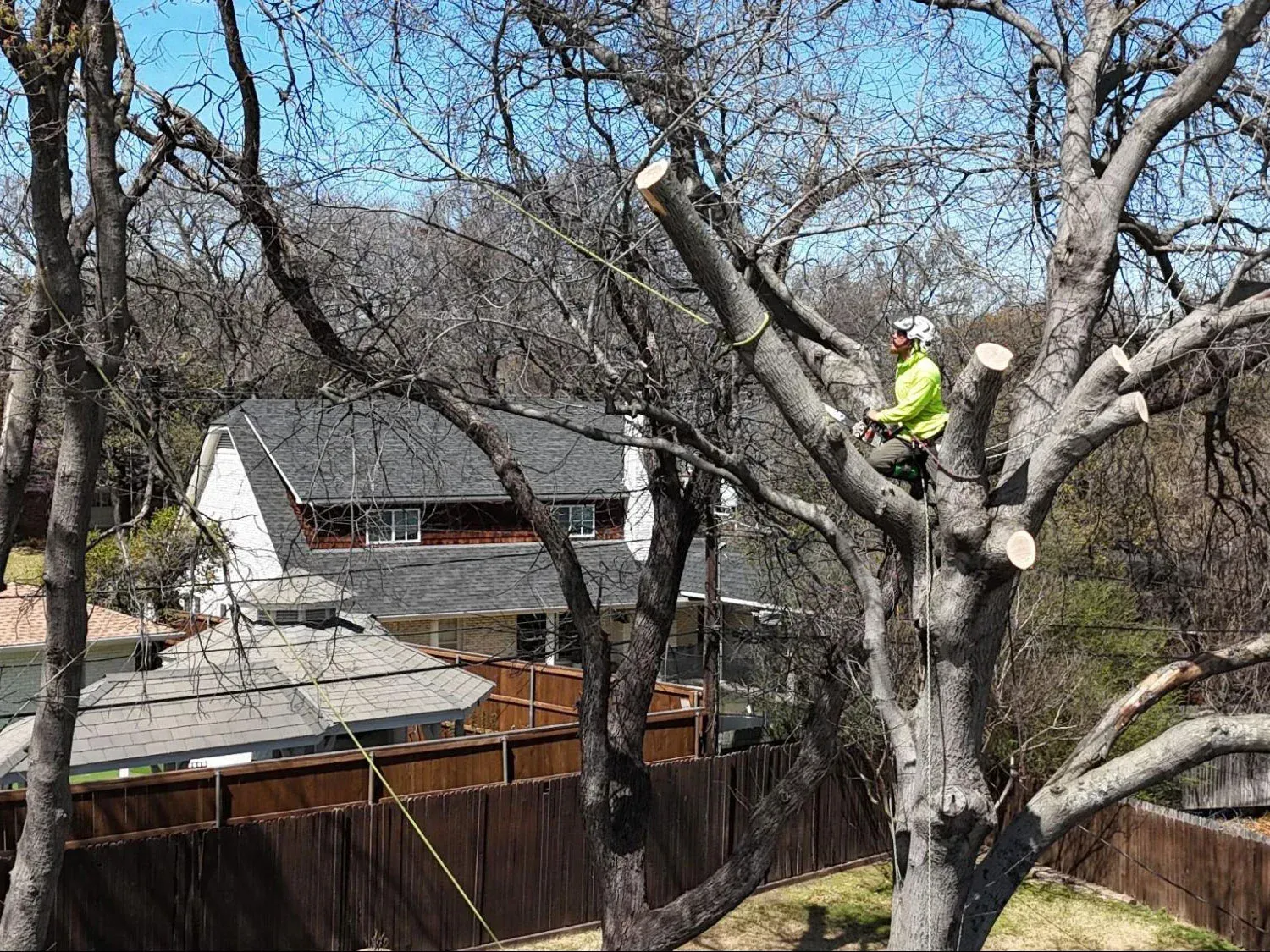
Tree trimming is one of those services most Cleburne and Burleson homeowners know they need — but aren't sure when, how often, or why. The wrong timing can stress a tree. The wrong technique can cause permanent damage. And the wrong crew can turn a routine maintenance visit into a liability. Branch Boss serves North Texas homeowners with ISA certified tree trimming that prioritizes long-term tree health over a fast cleanup job. This guide covers everything you need to know — the difference between trimming and pruning, when to act, what the warning signs look like, and what professional tree trimming in Cleburne TX actually involves.
Tree Trimming vs. Tree Pruning — What's the Difference and Does It Matter?
These terms are used interchangeably by most homeowners — but they describe different work with different goals:
| Tree Trimming | Tree Pruning | |
|---|---|---|
| Primary purpose | Aesthetics, size control, and safety clearance | Tree health, structural integrity, and long-term growth |
| What's removed | Overgrowth, excessive length, encroaching branches | Dead, diseased, crossing, or structurally weak branches |
| Timing | Often on a regular maintenance schedule | Timed to species, season, and health needs |
| Tools | Hedge trimmers, pole saws for shaping | Loppers, hand saws, and specialized cutting tools for precision |
| Long-term impact | Primarily cosmetic | Directly affects tree health, strength, and lifespan |
Does the difference matter? Absolutely. Incorrect trimming — particularly practices like topping or lion tailing — can shock trees, create weak regrowth, and increase liability from falling limbs. Proper pruning improves air circulation, strengthens structure, and extends the life of the tree. Knowing which service your tree actually needs is the first step toward making the right call.
When Is the Best Time to Trim Trees in North Texas?
Timing matters significantly for North Texas trees — and getting it wrong can cause more harm than doing nothing. Here's the seasonal guide for Cleburne and Burleson homeowners:
| Season | Recommendation | Why |
|---|---|---|
| Late fall through winter (Nov–Feb) | ✅ Best window for most species | Trees are dormant, disease risk is lowest, bark beetle activity is minimal, and the structure is fully visible without foliage |
| Late summer | ✅ Acceptable for spring-blooming trees and growth control on established trees | Slows growth on large mature trees without the spring stress risk |
| Spring (March–May) | ⚠️ Avoid for most species | Tree has just invested significant energy in new leaf growth — aggressive trimming causes major energy depletion and stress |
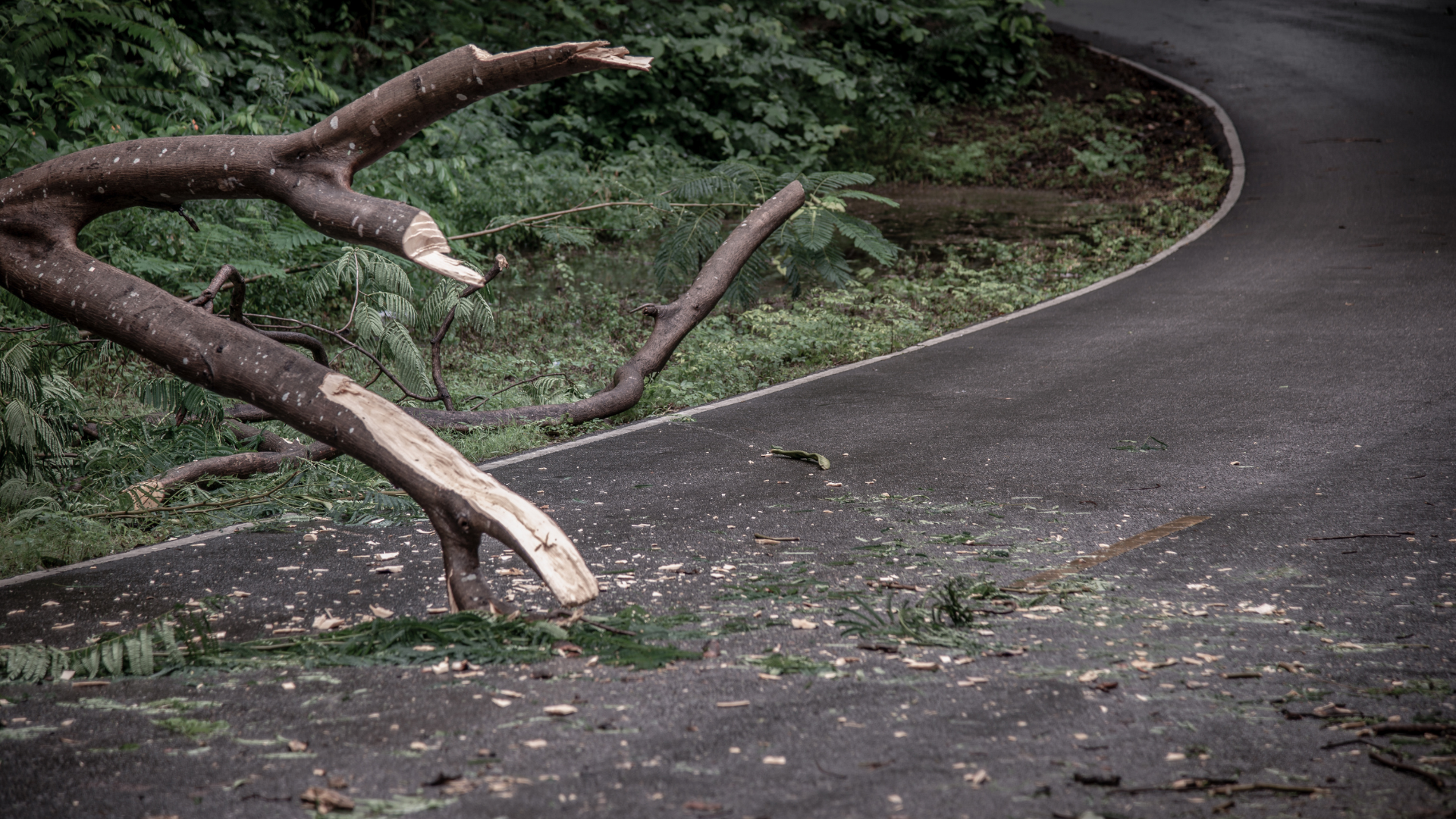
| Any season | ✅ For hazard removal | Broken, hanging, or dangerous limbs should be removed immediately regardless of timing |
Critical North Texas species note — Oak Wilt: For Live Oaks and Red Oaks, avoid any pruning between February and June. Oak Wilt fungus spreads rapidly through fresh pruning wounds during this window — carried by sap-feeding beetles that are most active in spring. If pruning is unavoidable during this period, all wounds must be painted immediately with pruning sealer to block beetle access.
Fruit trees should be pruned in late winter for optimal fruit production — before new growth begins but after the hardest freeze risk has passed.
For more on how North Texas spring conditions specifically stress trees and create structural risk, read our
spring tree stress guide for North Texas homeowners →
Signs Your Trees Need Trimming Now — Not Later
Trees give warning signs before a branch fails — knowing what to look for helps you act before an emergency does it for you.
🚨 Immediate danger — act now regardless of season:
| Warning Sign | Risk Level |
|---|---|
| Dead, dying, or brittle branches — bare of leaves during growing season, peeling gray bark, or snapping easily | Dead, dying, or brittle branches — bare of leaves during growing season, peeling gray bark, or snapping easily |
| Broken or hanging limbs — branches that snapped but are still lodged in the canopy | Broken or hanging limbs — branches that snapped but are still lodged in the canopy |
| Proximity to power lines — branches touching or within a few feet of utility lines | High — fire and safety hazard requiring certified professionals |
| Sudden new lean or soil heaving at the base — root failure in progress | Critical — requires emergency arborist assessment immediately |
| Critical — requires emergency arborist assessment immediately | Critical — requires emergency arborist assessment immediately |
Health and growth — trimming is overdue:
- Crossing and rubbing branches — grinding together wears away protective bark, creating wounds that invite pests and decay
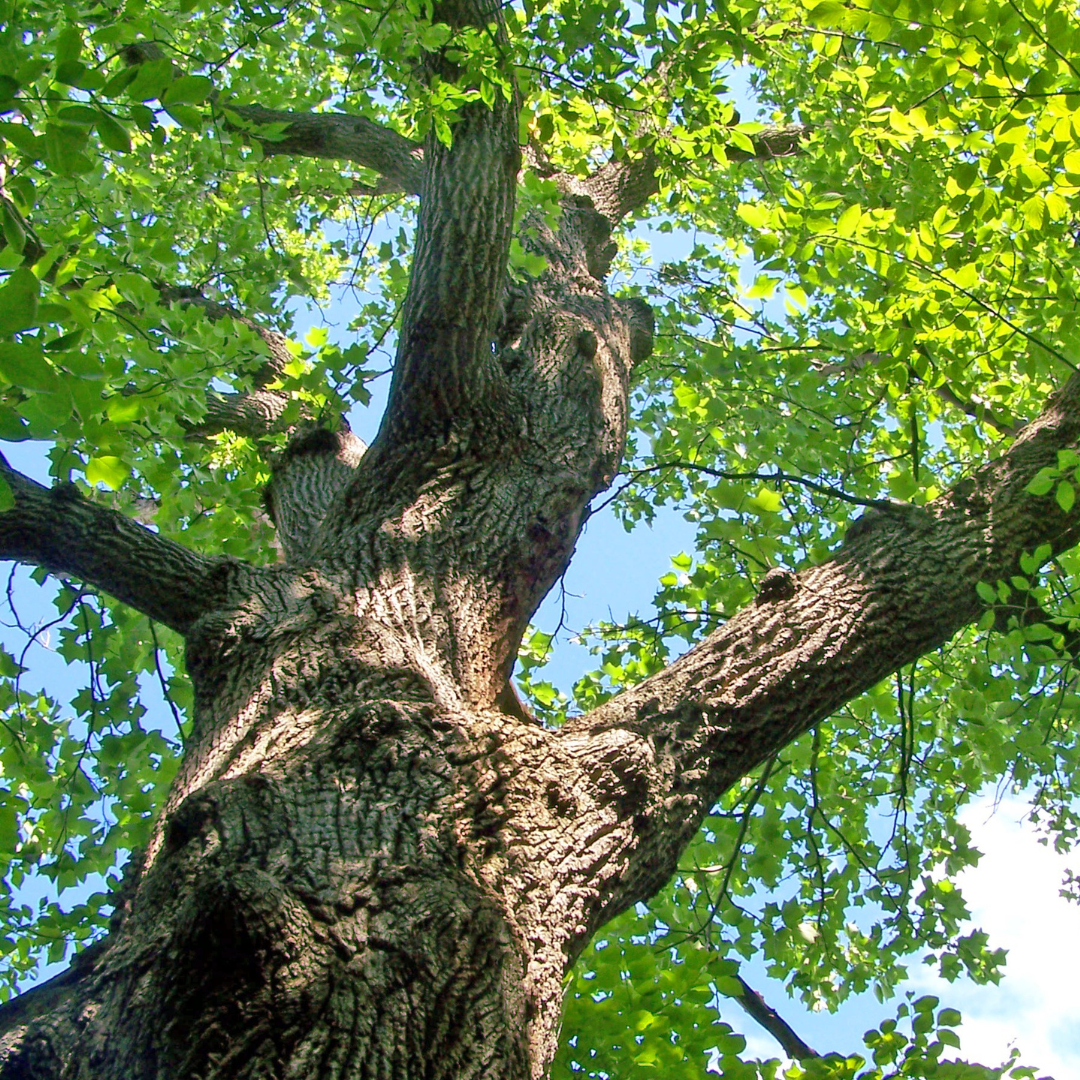
- Overly dense canopy — if sunlight isn't reaching the grass below, the canopy is trapping moisture and promoting fungal growth
- V-shaped branch unions — tight narrow forks rather than wide U-shapes are prone to splitting as the tree grows
- Water sprouts or sucker growth — thin vertical shoots at the base or on branches indicate stress requiring corrective thinning
- Pest or disease symptoms — discolored leaves, bark holes, or fungal conks on the trunk signal internal rot that needs to be pruned out before it spreads
Property management — practical clearance:
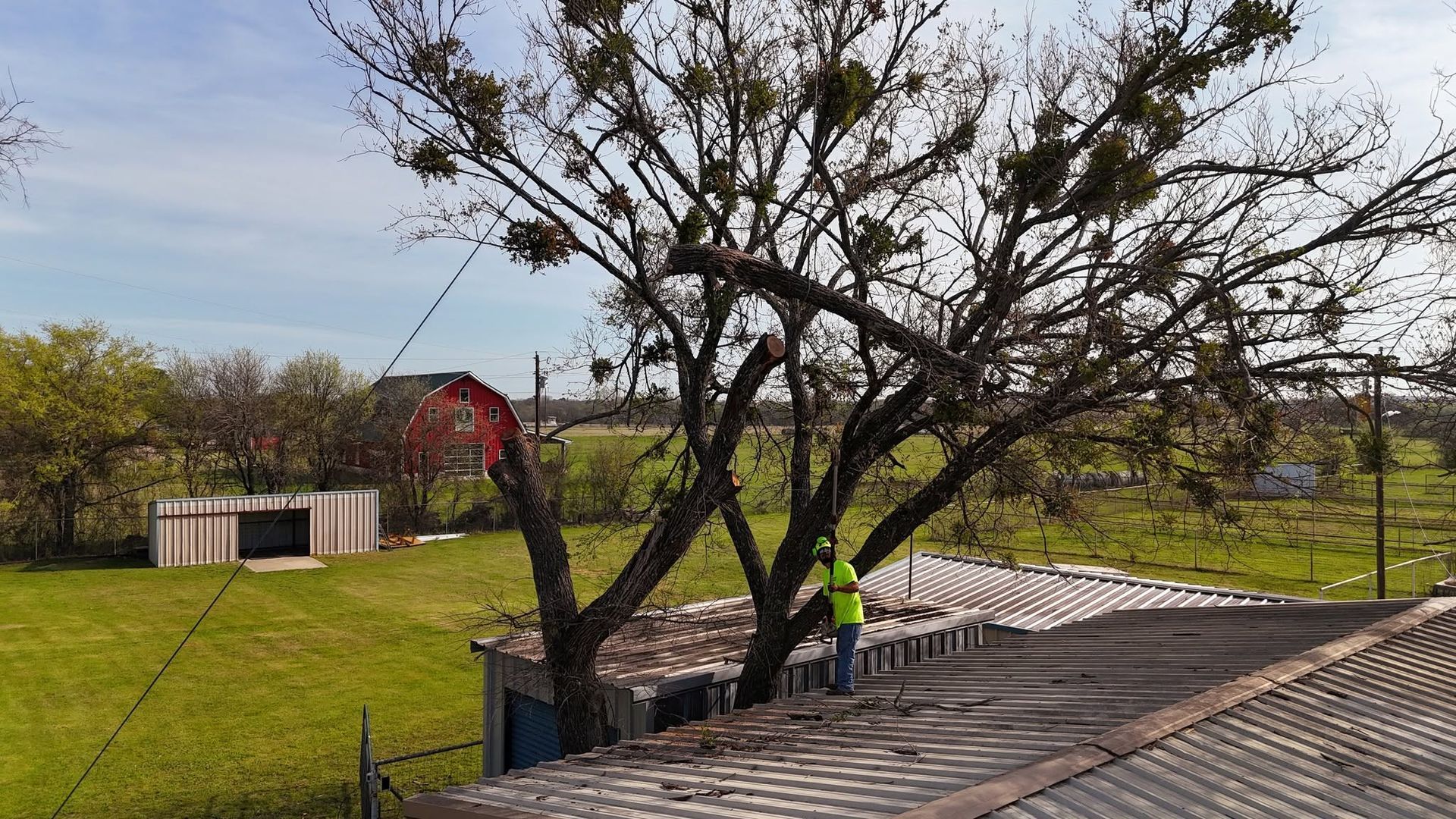
- Branches brushing against rooflines or siding — damage shingles and provide rodent access to attics
- Overgrowth obscuring road signs, traffic lights, or driveway sightlines
- Low-hanging limbs interfering with walking or lawn equipment
What Happens When Tree Trimming Is Done at the Wrong Time or Wrong Way
This is the section most Cleburne and Burleson homeowners never read — until they've already hired the wrong crew. These four mistakes cause permanent damage and are commonly used by low-cost operations that prioritize speed over tree health:
1. Lion Tailing Stripping all inner branches and foliage, leaving only a tuft of leaves at branch tips. In North Texas this is particularly damaging:
- Shifts all weight to branch tips — without inner foliage providing mass dampening, branches whip violently in high winds and snap far more easily
- Exposes previously shaded inner bark to direct Texas sun — causing sunscald, splitting, and decay
- Removes the leaves needed for photosynthesis — the tree depletes energy reserves pushing out weak sucker growth to survive
2. Tree Topping Indiscriminate cutting of main branches back to stubs to reduce height:
- Triggers a survival response producing many spindly, poorly attached branches prone to failure in even mild storms
- Creates large wounds the tree cannot naturally seal — open entry points for fungi, pests, and rot directly into the trunk
- Results in a tree that is more dangerous after topping than before — not less
3. Flush Cuts Removing a branch by cutting flush against the trunk — removing the branch collar:
- The branch collar contains the specialized cells the tree uses to seal off a wound
- Removing it leaves a wound that will never heal — leading to progressive internal rot that can eventually hollow the trunk
4. Trimming at the Wrong Time
- Oak Wilt season (Feb–June) — pruning oaks during this window in the DFW and Cleburne area is one of the fastest ways to kill a valuable tree
- Midsummer heat — extensive trimming during peak Texas summer adds stress to a tree already battling drought and heat
- Late fall live branch removal — cutting live branches in fall can stimulate new growth that won't harden before the first freeze, wasting the tree's stored energy
✏️
Each bad practice gets its own named subsection — much more authoritative and makes Branch Boss's expertise visible by contrast.
Tree Trimming Near Power Lines — What Cleburne Homeowners Need to Know
Power line proximity is one of the most serious and most misunderstood tree trimming situations a homeowner can face. Here's what Cleburne and Burleson homeowners need to know:
Who is responsible for what:
- Oncor (the local utility provider) is responsible for clearing trees around high-voltage transmission lines
- Homeowners are responsible for trees on their property that approach distribution lines — but this work must be performed by certified professionals
The non-negotiable safety rules:
- Never position yourself, ladders, or tools within 10 feet of electrical lines — voltage can arc without direct contact
- Never attempt to prune branches that are touching or tangled with power lines — they may be energized even if they appear safe
- If a tree is touching a line, sparking, or has fallen on a line — stay at least 30 feet away and call 911 immediately
Why Branch Boss for power line adjacent work:
- Professionals use specialized insulated equipment that eliminates electrocution risk
- If DIY trimming damages utility lines, the homeowner is liable for repair costs and potential fines
- Branch Boss carries full liability insurance and is familiar with Cleburne's local regulations for utility-adjacent tree work
What Professional Tree Trimming in Cleburne TX Actually Involves
Most homeowners assume tree trimming means a crew shows up, cuts some branches, and leaves. Here's what a professional service from Branch Boss actually includes:
1. Assessment and Inspection Every visit starts with a full visual assessment — structural issues, decay, disease, pest activity, root stability, and proximity to structures or utility lines. For trees with existing damage, we may create a multi-year restoration pruning plan.
2. Technique and Execution
| Pruning Type | Purpose |
|---|---|
| Deadwood removal | Eliminates hazard branches before they fall |
| Crown thinning | Reduces density to improve light penetration and air circulation — critical for storm resistance in North Texas |
| Crown raising | Lifts lower limbs for structure, vehicle, and pedestrian clearance |
| Structural pruning | Removes or reduces co-dominant stems and weak attachments before they fail |
| Weight reduction | Reduces end-weight on heavy limbs at risk of failure |
All cuts follow the three-cut method to protect the branch collar and allow proper wound sealing — never flush cuts, never stubs.
3. Site Cleanup and Disposal All branches, leaves, and wood debris are removed from the property. No hazardous limbs are left on roofs, in gutters, or scattered in the yard.
4. Follow-Up and Long-Term Care For trees with significant structural issues, restoration work may span multiple pruning cycles over several years. Branch Boss provides honest timelines and follow-up recommendations rather than a one-time fix that masks ongoing problems.
Cost reference for Cleburne and Burleson homeowners:
- Small trees — typically $100–$175
- Medium trees — typically $200–$350
- Large or complex trees — varies based on access, species, and condition
Always request a written itemized estimate before any work begins.
For more on how proper tree trimming connects to storm season safety in Cleburne and Burleson, read our
storm season prep guide for North Texas trees →
Branch Boss: Cleburne and Burleson's Local Tree Trimming Experts
Cleburne and Burleson homeowners deserve tree trimming that actually serves the tree — not just the invoice. Branch Boss provides ISA certified tree trimming and pruning throughout North Texas with the expertise to know the difference between a tree that needs a trim and one that needs a rescue.
Here's what you get with every Branch Boss service:
| What We Offer | What It Means for You |
|---|---|
| ISA Certified Arborists | Every cut is made with tree biology and long-term health in mind — not just what looks clean |
| North Texas species knowledge | Oak Wilt awareness, storm season timing, and species-specific pruning that protects your trees year-round |
| No topping, no lion tailing | We refuse shortcuts that damage trees — even when homeowners request them |
| Power line expertise | Fully insured and equipped for utility-adjacent work that DIY and uncertified crews should never attempt |
| Fully insured and equipped for utility-adjacent work that DIY and uncertified crews should never attempt | Every visit ends with a clean property — no debris left behind |
| Transparent written estimates | Itemized quotes before any work begins — no surprises |
Don't wait for a storm to reveal what your trees needed last winter. Contact Branch Boss today to schedule your tree trimming assessment in Cleburne, Burleson, and surrounding North Texas communities.
Schedule Your Tree Trimming Assessment →
Read: Storm Season Prep for North Texas Trees →
Don’t wait for the next storm to test your trees.
👉 Worried about a tree near your roof, driveway, or power lines?
Contact Branch Boss Tree Co. today to schedule your summer tree assessment and get expert trimming
that protects your property and peace of mind.
Call us today at
817-487-8448 to let us handle your tree and tree stump removal needs with professionalism and care.