Is Your North Texas Tree Dead or Just Dormant? How to Tell the Difference
Every late winter in Cleburne and Burleson, the same question comes up: is that tree dead — or just dormant? A bare, leafless tree in February can look identical to a dead one if you don't know what to look for. North Texas makes this harder than most regions because of unpredictable late-winter temperature swings — a 75-degree day followed by a hard freeze can send mixed signals to trees and homeowners alike. Some species don't show green until late April. Others look half-dead while being completely healthy. And some trees that look fine from the driveway have been dying for two seasons. Branch Boss helps Cleburne and Burleson homeowners sort this out — with honest assessments and practical answers. Here's exactly what to look for.
Why North Texas Homeowners Get Confused About Dead vs. Dormant
Late winter is genuinely the hardest time to assess a tree in this region — and here's why:
Erratic temperature cycles North Texas winters are defined by rapid swings — warm spells that trigger early bud activity followed by hard freezes that kill that new growth. A tree can show signs of both life and stress simultaneously, making assessment confusing even for experienced observers.
Species vary dramatically in timing Crape Myrtles are routinely the last trees to show signs of life in North Texas — often appearing completely dead well into May when they're perfectly healthy. Pecans may not leaf out until late April. Live Oaks go through a noticeable leaf drop in late winter that alarms homeowners every year — it's normal.
Drought stress mimics dormancy Dry winter soils in Cleburne and Burleson can cause dormant trees to show signs that look like dehydration stress — making healthy dormancy look like a dying tree to the untrained eye.
Which North Texas trees go dormant:
- Deciduous species — Shumard Red Oak, Bur Oak, Cedar Elm, Texas Redbud, Mexican Plum, various Maples, Pecan, Bald Cypress, Sycamore — lose all leaves and appear bare through winter
- Partial dormancy — Live Oaks and Yaupon Holly retain leaves but may look slow, tired, or drop significant foliage during winter in a process that's completely normal
The key is knowing which species you have and what normal dormancy looks like for that specific tree in North Texas conditions.
The Scratch Test — The Fastest Way to Check If a Tree Is Alive
This is the most reliable DIY test available — and it takes 30 seconds:
How to do it:
- Select a small twig — start at the outer tips of a branch and work inward
- Use a fingernail, pocket knife, or coin to gently scrape away just the outer layer of bark
- Look at what's immediately beneath the bark surface
What you're looking for:
| What You See | What It Means |
|---|---|
| Bright green or green-white tissue | The tree is alive — vascular tissue is intact and active |
| Dull or pale green | The tree is alive but may be under stress |
| Brown, tan, or dry tissue | That section of the branch is dead |
How to use the results correctly:
- Test multiple branches — particularly from different parts of the canopy
- Start at branch tips and work toward the trunk — this tells you how far the death has progressed
- If outer tips are brown but inner branches near the trunk are green — the tree is likely alive but experienced tip dieback from cold or drought stress
- If all tested areas return brown — the tree is likely dead
Important caveats:
- Don't make large cuts — small thumbnail scratches are sufficient and cause minimal wound
- Avoid testing in freezing conditions — even live branches can show reduced green tissue during a hard freeze
- Some species naturally show tan or light-colored cambium — if you're unsure, test a known-healthy tree of the same species for comparison
The Bend Test — What Flexible vs. Brittle Branches Tell You
The bend test works year-round and doesn't require any tools:
How to do it: Select a small twig — pencil diameter or slightly larger — and gently bend it. Don't force it — apply steady gentle pressure.
What you're looking for:
| Result | What It Means |
|---|---|
| Bends without snapping — remains pliable | Live wood — moisture content is intact |
| Snaps cleanly with a dry crack | Dead wood — moisture has left the tissue |
| Bends but shows splits or cracks | Weakened but possibly still alive — scratch test to confirm |
Using both tests together: The scratch test and bend test give you confirmation from two different angles. A branch that bends without snapping and shows green under the scratch is definitively alive. A branch that snaps and shows brown is definitively dead. When one test is ambiguous — run the other.
Note: Avoid the bend test during a hard freeze — even living branches can become temporarily brittle when frozen solid. Wait until temperatures are above freezing to get an accurate result.
Visual Signs a North Texas Tree Is Dead — Not Dormant
These visual indicators go beyond the two-minute DIY tests — and when you see multiple of these together, you're almost certainly looking at a dead tree:
- Bark falling off in large sheets Loose, peeling bark that pulls away in large sections revealing dry, grayish wood underneath is one of the clearest signs of death. Dormant trees have tight, intact bark — even species with naturally rough or exfoliating bark maintain secure attachment.
- No buds — or dead, shriveled buds Healthy dormant trees carry plump, firm buds at their branch tips — the stored energy for spring emergence. Dead trees have no buds at all, or hard, shriveled buds that show no swelling as temperatures warm in late February and March.
- Fungal growth at the base or on the trunk Shelf-like fungi, conks, or mushrooms growing from the lower trunk or root flare indicate internal decay that has progressed significantly. This is not a dormancy sign — it's structural decay that compromises the tree's safety.
- Insect exit holes in the bark Small round or D-shaped holes in the bark indicate wood-boring insects — bark beetles, emerald ash borers, or similar — that attack stressed or dead trees. In Cleburne and Burleson's established neighborhoods, these insects are present and active, and their exit holes confirm the tree they've colonized is compromised.
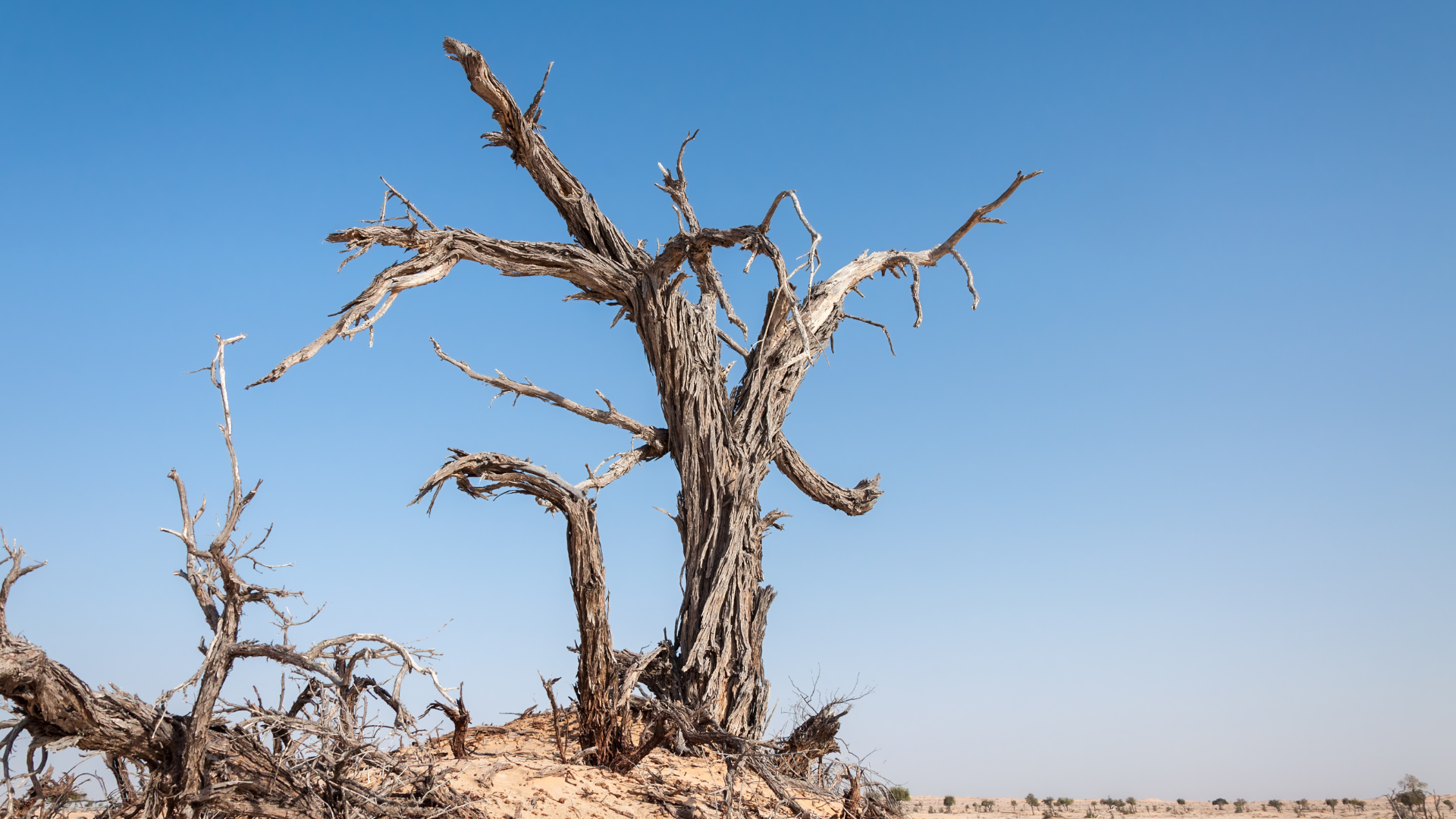
- Stag-head dieback pattern Dead upper branches extending above a thinning or dying canopy — sometimes called the stag-head appearance — indicate progressive death moving downward through the tree. This is a tree in active decline, not dormancy.
- Brittle branches throughout the canopy When the bend test returns brittle snapping not just at the tips but progressively toward the trunk — the tree is dead or dying throughout, not just experiencing tip dieback.
Visual Signs a Tree Is Dormant — Not Dead
When you're looking at a tree and wondering if it's okay — look for these positive signs of healthy dormancy:
- Firm, plump dormant buds Healthy dormant buds are present, symmetrical, and firm — often slightly swollen in late winter as temperatures begin warming. They haven't opened yet but they're clearly developing. This is the most reliable single visual sign of a living dormant tree.
- Tight, intact bark Bark is securely attached across the trunk and main branches — no loose sections, no large-scale peeling. Rougher-barked species like Shumard Red Oak and Post Oak can look weathered without being unhealthy — the test is whether it's actively separating from the wood beneath.
- Pliable smaller branches Small twigs that flex rather than snap — even in the absence of leaves — indicate live wood with intact moisture content.
- Healthy root collar The area where trunk meets ground is firm, shows no fungal growth, no soft spots, and no soil cracking or heaving that would suggest root failure.
- Green cambium on scratch test The gold standard — green tissue just beneath the bark surface, confirmed at multiple locations across the canopy.
North Texas Species That Are Most Commonly Misread
These are the trees Branch Boss gets called about most frequently in Cleburne and Burleson when homeowners suspect death during dormancy:
- Crape Myrtle Routinely the last tree to leaf out in North Texas — often not showing green until late April or even May. Homeowners who expect spring green-up in March frequently assume their Crape Myrtle has died. Scratch test a small twig before making any decisions — green cambium is almost always present in healthy specimens.
- Bald Cypress A deciduous conifer — it loses its needles every winter, which surprises homeowners unfamiliar with the species. Foliage turns rusty brown-orange before dropping. A bare, needle-free Bald Cypress in winter is completely normal. Look for firm buds and green cambium.
- Pecan Deciduous and often slow to leaf out — sometimes not fully leafed until late April in Cleburne and Burleson. Susceptible to bark beetle stress if the tree went into winter drought-stressed, so scratch testing multiple locations is worthwhile. Compound leaves with 11 to 17 leaflets emerge once the tree breaks dormancy.
- Cedar Elm Common in established North Texas neighborhoods — small, rough-textured leaves, drops in fall, and can look severely stressed after a dry winter. Requires supplemental water during North Texas winter droughts to prevent real dieback. Scratch test and bend test both apply well to Cedar Elm assessment.
- Live Oak Partially evergreen but goes through a significant leaf drop in late winter as new growth pushes out old foliage — this is completely normal and not a sign of decline. A Live Oak shedding heavily in February or March is almost certainly healthy. The concern is when the new growth doesn't follow.
When to Call Branch Boss — And When to Wait and Watch
Here's the honest decision framework:
Call Branch Boss immediately for:
| Urgent Sign | Why It Can't Wait |
|---|---|
| Sudden new lean — especially with soil heaving | Active root failure — structural collapse risk |
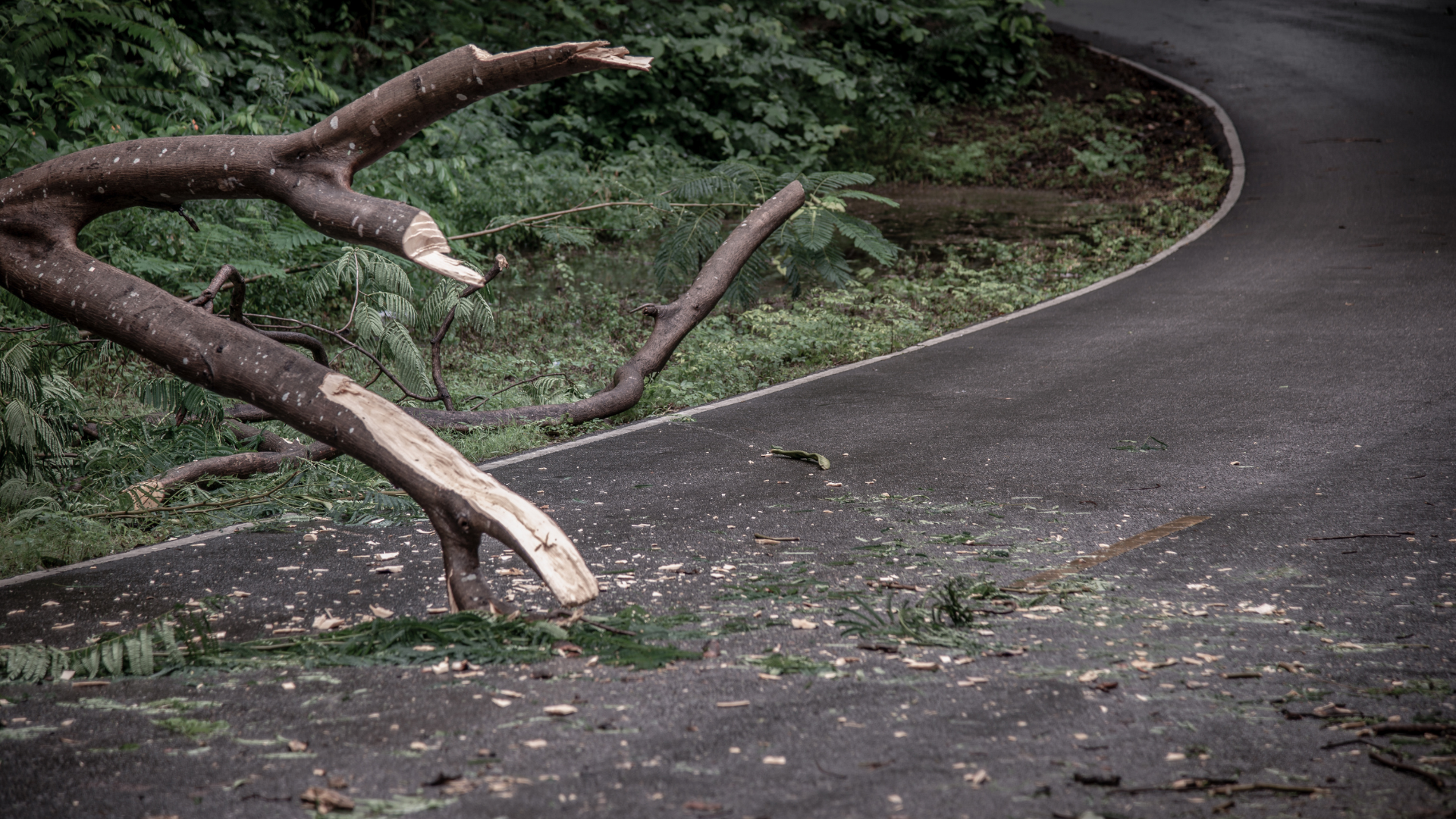
| Large hanging or broken branches | Immediate hazard over structures, vehicles, or pathways |
| Active trunk cracks or splitting sounds | Imminent structural failure |
| Fungal growth at the trunk base | Internal decay — safety assessment required |
| Tree in contact with or near power lines | Utility hazard — requires certified professional |
| Storm damage with significant structural compromise | Don't wait for the next wind event to test it |
Watch and wait through spring green-up for:
- Minor tip dieback where inner branches scratch green
- A long-standing slight lean that hasn't changed
- Species known for late leafing out — Crape Myrtle, Pecan, Bald Cypress
- Minor canopy thinning without structural indicators
- Light deadwood in outer branches without hazard proximity
The timing advantage of winter assessment: Winter is actually the best structural assessment window — without foliage, cracks, cavities, co-dominant stems, and included bark are all clearly visible. Spring is better for canopy health assessment. If you're uncertain about structural integrity — winter is the right time to get professional eyes on it.
What Happens If a Dead Tree Is Left Standing in North Texas
This is the question that turns "wait and see" into "should have called sooner":
- Structural failure risk accelerates with every storm season A dead tree in Cleburne and Burleson doesn't just stay a dead tree — it becomes progressively more dangerous as internal wood decay advances and root system integrity deteriorates. The question isn't whether it will fall. It's whether it will fall during a calm day or during a spring storm with 60 mph gusts.
- Fire risk in dry North Texas summers Dead standing timber is highly combustible — particularly relevant during the dry summer months when North Texas fire risk is elevated. A dead tree adjacent to a structure or fence line creates a fire exposure that a live tree doesn't.
- Pest spread to neighboring healthy trees Dead trees attract bark beetles and wood-boring insects that, once established, spread to neighboring stressed-but-living trees. In Cleburne and Burleson's established neighborhoods where trees grow in close proximity, a dead standing tree is a pest reservoir for the healthy trees surrounding it.
- Increasing removal cost over time A dead tree removed promptly costs less than the same tree removed after structural deterioration has made it an emergency situation requiring specialized rigging — or after it's fallen on something that requires additional repair.
- Liability exposure A tree that has been identified as dead or declining and left standing creates documented liability if it subsequently fails and causes property damage or injury. The most important reason to call Branch Boss for an assessment isn't just the tree — it's protecting yourself from the consequences of what happens if you don't.
Don't wait for the next storm to find out what that bare tree actually was. Contact Branch Boss today for your dead vs. dormant tree assessment in Cleburne, Burleson, and surrounding North Texas communities.
Schedule Your Tree Assessment →
Read: Storm Season Prep for North Texas Trees →
Read: Tree Removal in Cleburne TX →
Don’t wait for the next storm to test your trees.
👉 Worried about a tree near your roof, driveway, or power lines?
Contact Branch Boss Tree Co. today to schedule your summer tree assessment and get expert trimming
that protects your property and peace of mind.
Call us today at
817-487-8448 to let us handle your tree and tree stump removal needs with professionalism and care.