Land Clearing in Cleburne TX: What to Expect and When You Need It
If you own property in Cleburne or Burleson with overgrown brush, cedar, mesquite, or wooded acreage you've been meaning to address — the question isn't whether land clearing is the right call. It's what the process actually involves, what it costs, and who to trust with equipment on your property. Branch Boss provides land clearing, lot clearing, and brush removal throughout Cleburne, Burleson, and surrounding Johnson County — with the heavy equipment capability and North Texas terrain experience that this kind of work requires. This guide tells you everything you need to know before making that first call.
What Is Land Clearing — And What Does It Actually Involve?
Land clearing is the process of removing trees, shrubs, brush, stumps, and overgrown vegetation from a property to make it usable — for construction, agriculture, pasture, or property management. It's not logging, and it's not always complete removal — the scope depends entirely on the end goal.
Here's what full land clearing typically covers:
Brush and vegetation removal Shrubs, vines, invasive species, and dense undergrowth removed first — often the most time-consuming portion on Johnson County properties with established cedar and mesquite. Forestry mulching equipment handles this efficiently without the hauling that traditional methods require.
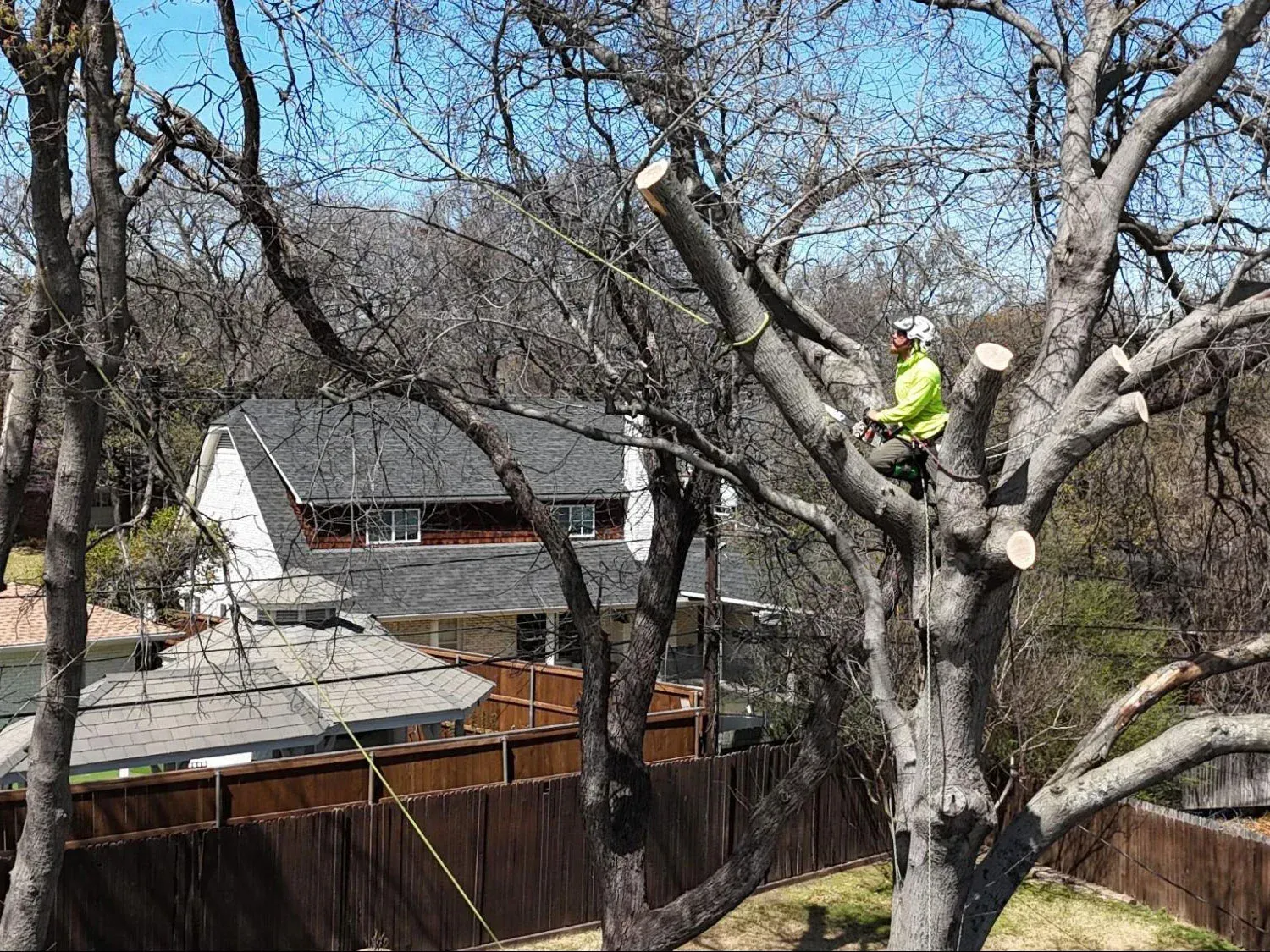
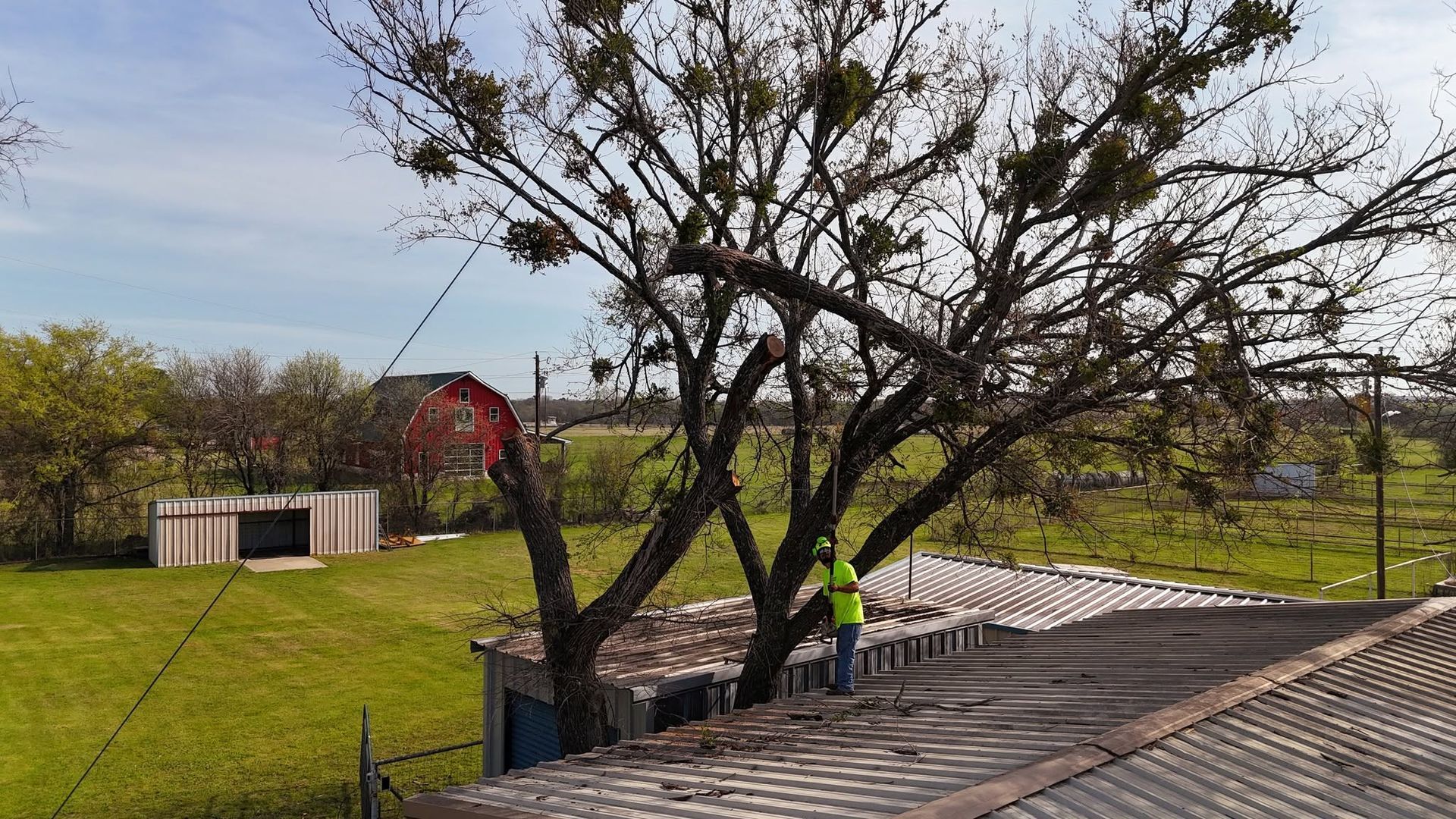
Tree removal Unwanted trees cut and managed — either hauled, chipped, or mulched on-site depending on project requirements. Selective clearing preserves specific trees the property owner wants to keep.
Stump grinding and grubbing Stumps cut flush or extracted with root balls depending on end use. Construction sites typically require full grubbing to prevent future structural issues. Pasture reclamation may only need grinding.
Debris management Resulting material either hauled off-site, ground into mulch on-site via forestry mulching, or piled for burning where local regulations permit. Mulching on-site is almost always the most cost-effective and erosion-protective option.
Grading prep For construction projects — the site leveled, low spots filled, and a consistent slope established to direct drainage away from future foundations and structures.
What the process looks like from start to finish:
- Site assessment — vegetation type, soil condition, terrain, drainage, and end-use goal
- Permitting if required — protected species, burn permits, water body proximity
- Equipment mobilization and execution — mulchers, excavators, skid steers
- Final cleanup and site stabilization
What to expect on your first call with Branch Boss: We'll ask what the end goal is, what the terrain looks like, what you want preserved, and whether access is straightforward for heavy equipment. Those four questions determine the scope and the quote.
When Does a Cleburne or Burleson Property Need Land Clearing?
North Texas's specific combination of rapid development pressure, aggressive cedar and mesquite growth, and Johnson County's fire season creates consistent, predictable land clearing demand:
New construction prep The DFW metroplex has expanded significantly into Johnson County — and with it, the demand for cleared building pads, barn sites, driveway access, and workshop pads on rural properties. A wooded or brushy lot that isn't build-ready needs clearing before any other site work can begin. Branch Boss clears and preps the site — including access routes for construction equipment.
Fire mitigation and defensible space Johnson County's dry summers create genuine wildfire risk on properties with accumulated cedar, mesquite, and brush. Creating defensible space means removing "ladder fuel" — the ground-level brush and lower branches that allow fire to climb from the ground into tree crowns — and establishing cleared firebreaks around structures. City of Burleson ordinances also require vegetation under 12 inches height to avoid code violations on maintained properties.
Pasture reclamation Mesquite, juniper cedar, and prickly pear invade grazing land continuously in this region — reducing productive pasture acreage every year without active management. Reclaiming overgrown pasture returns usable grazing acreage, eliminates invasive species that outcompete native grasses, and can be done through forestry mulching that returns organic matter to the soil rather than burning it off.
Fence line clearing Thorny brush growth along fence lines in Johnson County buries and damages fencing consistently — creating both maintenance access problems and structural failure risk during wind events and wildfires. Clearing fence lines allows repair access, prevents brush-driven fence damage, and eliminates fuel accumulation along property boundaries.
Overgrown acreage and property management Properties that haven't been actively managed develop thick brush growth that reduces visibility, harbors snakes, ticks, and rodents, and degrades both property value and usability. Clearing opens the land, improves sight lines, and makes the property functional again.
Best timing for Cleburne and Burleson: Fall and winter are the optimal clearing windows in Johnson County — lower fire risk during execution, dormant vegetation that regrows more slowly after clearing, and firmer soil that supports heavy equipment without rutting. Branch Boss books fall and winter clearing projects quickly — scheduling in advance secures the best availability.
How Branch Boss Approaches Land Clearing in North Texas
Land clearing in Johnson County's specific terrain requires equipment selection and operational approach that accounts for what's actually on these properties:
Equipment-based efficiency Branch Boss uses skid steers with forestry mulching heads, track excavators, and appropriate support equipment for the specific project scope. The mulching head approach is particularly effective for brush and understory clearing — processing vegetation on-site rather than hauling multiple loads of debris significantly reduces project time and cost.
Clay soil management North Texas clay soil requires equipment selection and operational timing that minimizes compaction damage. Heavy equipment on saturated clay creates compaction that impairs drainage and root growth for years after the project. Branch Boss schedules and operates with clay soil conditions in mind — working in dry conditions where possible, using tracked equipment that distributes weight more effectively than wheeled alternatives, and avoiding operations after significant rain events.
Selective vs. complete clearing Not every tree on every Johnson County property needs to come down. Branch Boss discusses preservation goals with property owners before any equipment moves — flagging trees to keep, identifying property boundaries, and executing clearing that achieves the project goal without unnecessary removal.
Erosion management on disturbed sites Cleared North Texas clay soil is vulnerable to erosion during rain events. Branch Boss incorporates erosion management into project completion — whether through on-site mulching that leaves a protective layer, site grading that establishes proper drainage, or silt fence installation where site conditions require it.
Land Clearing vs. Forestry Mulching — Which Does Your Property Need?
These two services are often confused — and choosing the right one for your specific situation affects both cost and outcome:
| Forestry Mulching | Traditional Land Clearing | |
|---|---|---|
| Best for | Brush reclamation, pasture, fence lines, fire mitigation, trails | Construction pads, road building, full site development requiring bare soil |
| What's left behind | Protective mulch layer on the soil surface | Bare, graded soil ready for excavation or construction |
| Soil impact | Minimal disturbance, organic matter returned | Significant disturbance, topsoil exposure |
| Debris handling | Processed on-site — no hauling | Hauled off-site or burned |
| Cost | Generally 20–30% less than traditional clearing | Higher due to hauling, additional equipment, disposal |
| Timeline | Faster — single machine process | Longer — multiple equipment types and debris management steps |
The honest decision framework: If your goal is construction — you need traditional clearing and grading that leaves the site ready for a foundation, slab, or road base. If your goal is pasture reclamation, fire mitigation, fence line clearing, or property management — forestry mulching almost always produces better results at lower cost. Many Johnson County projects combine both: mulching for the brush and understory, traditional removal for specific large trees that need to come out entirely.
For a complete guide to forestry mulching specifically, read our
forestry mulching guide →
What Does Land Clearing Cost in Cleburne and Burleson TX?
Here are realistic cost ranges for Johnson County land clearing in 2026:
| Scope | Cost Per Acre | Notes |
|---|---|---|
| Light brush and vegetation | $1,200–$2,500 | Sparse understory, minimal large trees |
| Medium density vegetation | $2,500–$4,500 | Mixed brush and small trees, typical Johnson County pasture |
| Heavy wooded or dense forest | $4,000–$6,000+ | Established cedar, large oak, dense mesquite |
| Small lot under 0.5 acres | $500–$2,000 | Higher per-unit cost due to equipment mobilization |
Forestry mulching vs. traditional clearing cost comparison:
- Forestry mulching: $1,500–$4,500 per acre — on-site processing eliminates hauling cost
- Traditional clearing with hauling: $3,000–$6,000+ per acre — equipment, labor, disposal fees
Mulching is typically 20 to 30% less expensive than traditional clearing for equivalent vegetation density because debris management is handled in a single pass rather than requiring separate hauling equipment and disposal.
What drives cost up in Johnson County specifically:
- Dense cedar and mesquite requiring multiple passes
- Steep terrain or limited equipment access
- Wet soil conditions requiring scheduling delays
- Full stump grubbing (root ball extraction) vs. grinding only
- Distance from Cleburne/Burleson affecting mobilization
Important note on equipment day rates: Some contractors quote by equipment hour rather than per acre — skid steer mulchers run approximately $135 to $250 per hour in this market. Per-acre quoting is generally more predictable for property owners. Branch Boss provides written per-project estimates rather than open-ended hourly rates.
What to Do Before the Crew Arrives — Property Prep Guide
Proper preparation before Branch Boss arrives makes the project faster, safer, and less expensive:
Call 811 — Texas One Call Call 811 at least 2 to 3 business days before the project start date. This is a free service that marks public underground utility lines — gas, electric, telecommunications, and water — throughout the work area. Texas 811 coordinates all public utility locates. This step is legally required before any ground disturbance in Texas and protects you from liability for utility damage.
Mark your private lines Public 811 locates only mark publicly maintained utilities. You are responsible for marking any private lines on your property:
- Septic system and drain field
- Private well lines
- Propane lines to structures or tanks
- Irrigation system lines
- Private electric lines to outbuildings, barns, or shops
- Invisible fence lines
Use marking flags or spray paint to identify these before the crew arrives.
Define what stays Walk the property before the crew arrives and mark any trees, structures, or boundary features you want preserved. Spray paint, flagging tape, or construction fence all work. Be specific — "the oaks along the north fence line stay" is more useful than a general description.
Prepare access
- Unlock all gates large enough for tracked equipment
- Remove vehicles, trailers, and equipment from the work area
- Secure livestock and pets away from the site
- Identify and communicate any soft soil areas, drainage ditches, or buried tanks to the crew foreman
Document the site before work begins Photograph the entire property before the crew starts — utility markings, boundary flags, structures, and the vegetation being cleared. This protects both parties and creates a useful before-and-after record.
What to Expect After Land Clearing Is Complete
The site immediately after clearing looks different depending on the method used — and there are important steps to take quickly to protect the cleared ground:
Site condition after forestry mulching: A protective layer of processed wood chip mulch covers the soil surface — this is intentional and beneficial. It suppresses immediate weed regrowth, protects against erosion during rain events, and improves soil organic content as it breaks down. The site is typically ready for fencing, pasture seeding, or property use immediately.
Site condition after traditional clearing: Exposed bare soil that is vulnerable to erosion — particularly during Johnson County's storm season. Immediate stabilization steps matter:
- Silt fence installation along downslope edges and water bodies
- Erosion control blankets on any significant slopes
- Ground cover seeding as quickly as practical
Next steps by end use:
For construction:
- Final grading establishes drainage slope away from the building pad
- Surveying and boundary marking before foundation work begins
- Permit inspections for grading and erosion control where required
- Utility line installation planning with marked routes
For pasture reclamation:
- Soil test before any fertilization or seeding — Johnson County clay soil pH and nutrient levels vary significantly
- Select appropriate grass variety for your specific acreage and use (coastal Bermuda, native grass mixes, etc.)
- Seeding timing coordinated with rainfall and season
For fire mitigation:
- The cleared area should be maintained — brush regrowth in Johnson County is aggressive, particularly cedar and mesquite. Annual maintenance clearing keeps the defensible space functional.
What the land won't be immediately: Traditional clearing leaves a site ready for grading and construction prep — not a finished, graded building pad. Grading, compaction testing, and site engineering follow clearing as separate phases for construction projects.
Serving Cleburne, Burleson, Granbury, and Surrounding Johnson County
Branch Boss provides land clearing, lot clearing, brush removal, and forestry mulching throughout Cleburne, Burleson, Granbury, Alvarado, Joshua, Crowley, and surrounding Johnson County and North Texas communities.
Whether you're clearing a building site, reclaiming pasture from cedar and mesquite, creating defensible space before fire season, or managing a fence line that's disappeared into thorny brush — Branch Boss has the equipment and the North Texas terrain experience to get it done.
Here's what every Branch Boss land clearing project includes:
| Service Component | What It Means for Your Property |
|---|---|
| Written project estimate | Scope, method, and pricing confirmed before any equipment moves |
| Site assessment before quoting | We evaluate your specific acreage, vegetation, and terrain before giving a number |
| Equipment selection for your project | Right machine for your specific scope — not one-size-fits-all |
| Clay soil awareness | Scheduling and operations that minimize compaction damage on Johnson County properties |
| Selective clearing capability | Trees you want to keep stay standing — we work around your preservation goals |
| Debris management options | On-site mulching, hauling, or combination depending on project requirements |
| Erosion management | Site left stable, not vulnerable — mulch layer or stabilization measures included |
| Full liability and equipment insurance | Your property is protected throughout the project |
Ready to get your Cleburne or Burleson property cleared?
Contact Branch Boss today for your land clearing assessment.
Schedule Your Free Land Clearing Assessment →
Read: Forestry Mulching in North Texas →
Don’t wait for the next storm to test your trees.
👉 Worried about a tree near your roof, driveway, or power lines?
Contact Branch Boss Tree Co. today to schedule your summer tree assessment and get expert trimming
that protects your property and peace of mind.
Call us today at
817-487-8448 to let us handle your tree and tree stump removal needs with professionalism and care.