Tree Removal in Granbury TX: What to Expect, What It Costs, and How to Choose the Right Service
Tree removal in Granbury isn't the same conversation it is in a flat suburban market. Lake Granbury's shoreline terrain, Hood County's clay and limestone soil, the rural property tree populations that have gone unmanaged for decades, and the specific storm damage patterns from Hood County's severe weather corridor create removal conditions that require more than a chainsaw and a truck. The right tree removal service for a Granbury property understands the terrain, carries the credentials, and can tell you honestly whether a tree actually needs to come down or whether there's a better option. Branch Boss provides ISA certified tree removal throughout Granbury, Hood County, and surrounding North Texas. This guide covers when removal is the right call, what it costs in this specific market, what to look for when hiring, and exactly what the removal process involves from first call to site restoration.
When Does a Granbury Tree Actually Need to Be Removed?
The remove vs. trim vs. treat decision is the most important assessment in any tree service engagement — and getting it right protects both the property and the tree population on it:
Remove — when the tree presents an irreversible hazard or structural failure:
| Condition | Why Removal Is the Right Call |
|---|---|
| Storm damage with 50%+ canopy loss or split trunk | Structural integrity is permanently compromised — recovery is not realistic |
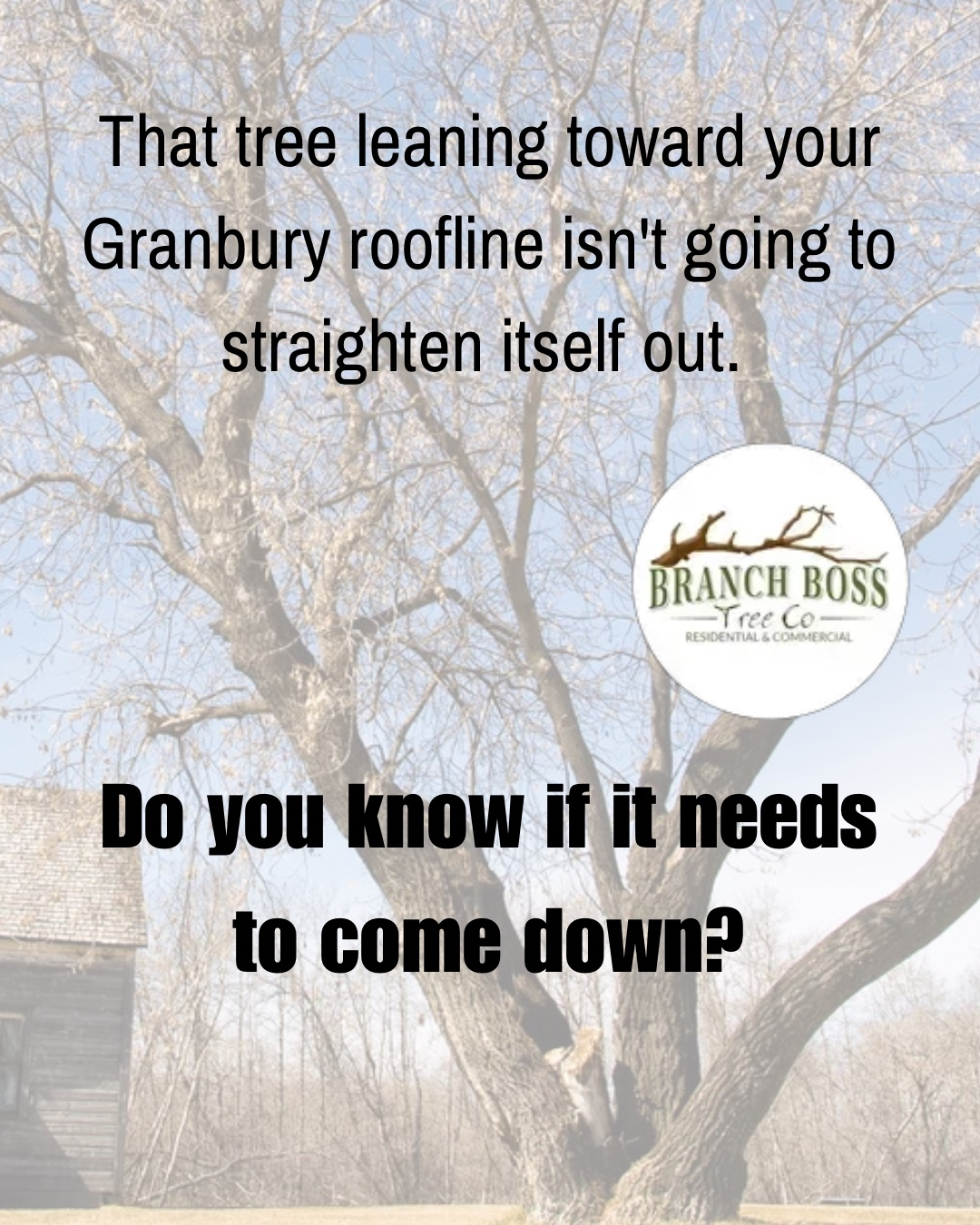
| Leaning more than 15 degrees with soil heaving | Root plate failure — the tree will not stabilize and will fall |
| Advanced trunk decay in 30%+ of trunk diameter | Structural capacity is insufficient — the tree is a hazard regardless of canopy appearance |
| Root intrusion into foundation, bulkhead, or septic | Continued root growth will compound the structural damage — removal stops the progression |
| Dead cambium with borer infestation | The tree is past recovery and is actively hosting pests that will spread to adjacent healthy trees |
Trim — when the hazard is limb-specific rather than structural: Broken or hanging widow maker limbs, canopy over structures, deadwood removal, and crown thinning for wind resistance are trimming conversations — not removal conversations. A tree that has lost significant limbs in a storm but retains a sound trunk and root system is often a trimming and monitoring candidate, not a removal.
Treat — when the underlying problem is addressable: Heat stress, early drought decline, recoverable disease, and minor root zone issues respond to treatment — deep watering, mulching, soil amendment, systemic treatment for specific pests. Branch Boss performs a full assessment before any removal recommendation specifically to identify trees where treatment or trimming is the better outcome.
Hood County specific considerations:
Lake Granbury proximity and soil mechanics Trees growing near the Lake Granbury shoreline that are visibly undermining seawalls, bulkheads, or dock structures typically warrant removal — the root damage to these structures compounds continuously and trimming doesn't address the root cause. Clay soils along the lake shore become unstable when saturated — a tree that has shifted position after heavy rain in a clay soil area requires urgent assessment.
City of Granbury tree regulations The City of Granbury enforces tree conservation ordinances for protected trees — typically hardwoods including oaks, elms, and pecans at or above 6 inches in diameter. Removal of protected trees requires an approved permit and in some cases a mitigation plan. Branch Boss handles permit research and applications as part of the removal process — homeowners should not begin removal of large hardwoods without confirming permit requirements first.
The scratch test for heat-stressed trees: Before calling for removal on a tree showing summer decline — scrape the bark on a small twig. Green and moist cambium beneath the bark means the tree is alive and potentially recoverable through treatment. Brown and dry with a snap means the wood is dead. This test determines whether June heat stress is a treatment conversation or a removal conversation.
Why Tree Removal in Granbury Is Different From Flat Suburban Markets
The conditions that make Granbury a unique tree removal market aren't minor nuances — they affect equipment selection, crew methodology, safety protocols, and ultimately which companies can actually execute the work correctly:
Lakeside terrain and slope access Properties along Lake Granbury and the Brazos River frequently have severe grade changes, rocky outcroppings, and steep slopes that standard bucket trucks cannot access safely. Tree services working in this terrain rely on specialized tracked equipment, advanced rigging systems, and manual climbing techniques that require significantly more expertise than flat-ground removal. Erosion management after removal on sloped lakeside properties is also a genuine concern — removing a large tree from a steep slope without soil stabilization creates runoff problems that flat-ground removal doesn't produce.
Clay soil root system behavior Hood County's clay-dominant soils — including the Paluxy and Glen Rose formations common throughout the region — force root systems to grow wide and shallow rather than deep. This creates two specific challenges in tree removal: root systems that extend further horizontally than the canopy suggests, and stump grinding in clay that requires more care to avoid disturbing adjacent tree root systems and the foundations of nearby structures.
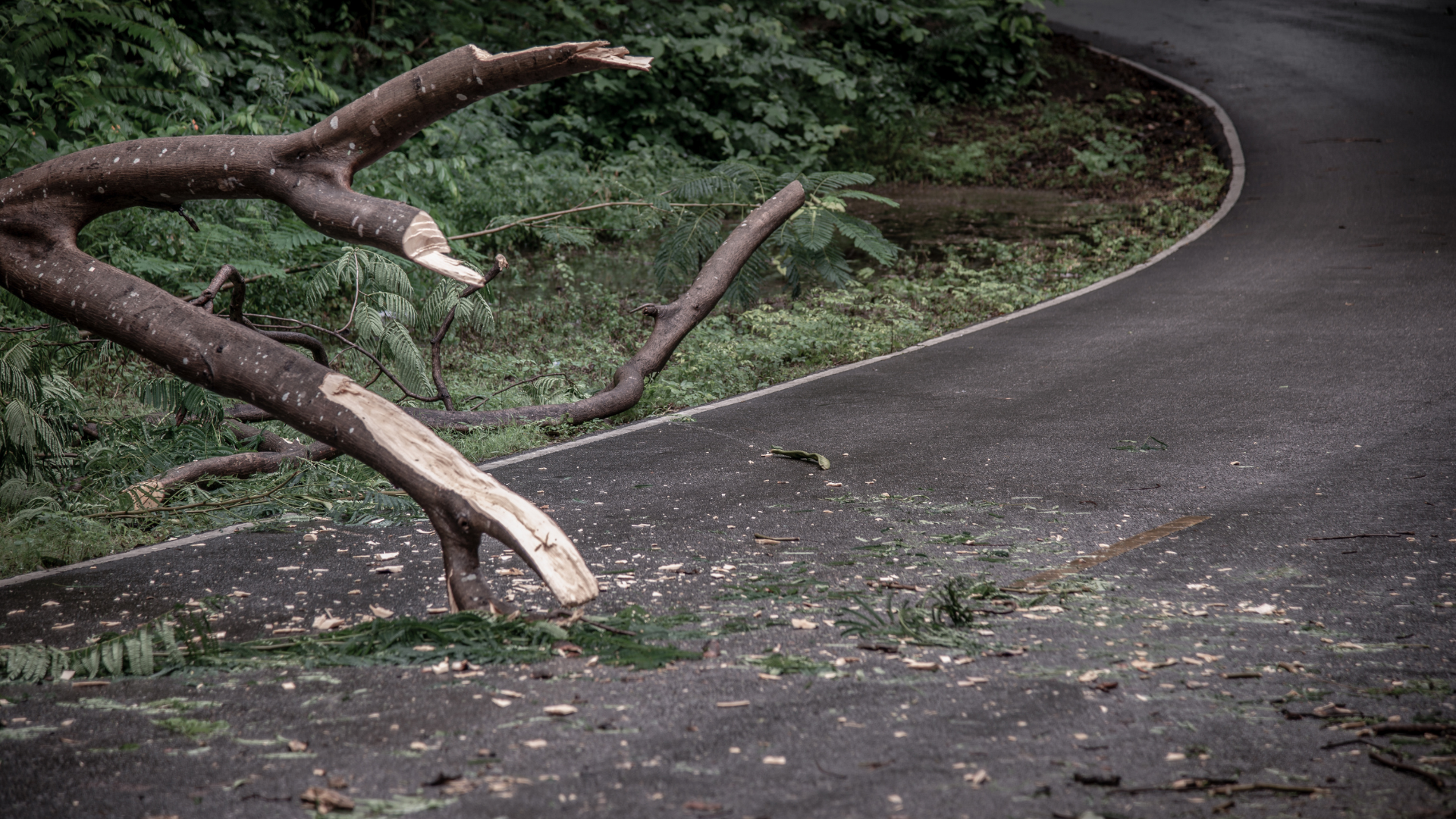
Storm damage complexity Hood County's position in a severe weather corridor produces storm-damaged trees with tension wood — wood under compression or tension from the fall position — that behaves differently under the chainsaw than undamaged trees. Crews that don't understand tension wood dynamics create dangerous, unpredictable cut behavior. The storm damage removal work that Branch Boss performs requires rigging and cut sequencing that accounts for load paths, not just the visual position of the tree.
Unmanaged rural property populations Many rural Hood County acreages have dense tree populations that haven't received professional management in decades. These properties present interlocking canopies, high concentrations of deadwood, heavily leaning trees, and invasive Ashe Juniper populations that have crowded out native Live Oaks and Post Oaks. Removal on these properties isn't a single-tree operation — it requires strategic assessment of the full tree population to prioritize which removals protect the remaining healthy trees.
What to Look for When Hiring a Tree Removal Service in Granbury TX
The tree removal market in North Texas includes both reputable certified companies and transient crews that appear after storm events without local accountability. Here's the buyer's checklist:
ISA Certified Arborist on staff The International Society of Arboriculture certification requires demonstrated knowledge of tree biology, risk assessment, and proper removal methodology. An ISA certified arborist on the crew means the removal is being assessed by someone who understands what they're removing and why — not just someone with a chainsaw. This matters particularly in Granbury's market where protected oak species, slope conditions, and storm damage complexity make methodology decisions consequential.
Insurance verification — do this before signing anything Request the Certificate of Insurance and call the issuing agent to confirm it's active. Confirm both general liability coverage — which covers property damage during the job — and worker's compensation, which is optional in Texas but critical. A crew working on your property without worker's compensation means injury liability can fall on the homeowner. Verbal confirmation of insurance is not sufficient.
Local Hood County references Ask specifically for references from Granbury, Acton, or Tolar area jobs — not just DFW or general North Texas references. Local homeowners can tell you whether the company navigated the specific terrain and soil conditions in this market correctly.
Written estimate with full scope A legitimate written estimate specifies: the specific trees being removed, the equipment to be used, whether stump grinding is included, debris disposal scope, and total cost. "Tree removal — call for pricing" is not a written estimate. Any company that won't provide written scope before work begins is a company that will have scope disputes after work begins.
Red flags specific to the Granbury market:
🚩 Door-to-door solicitation immediately after a storm — transient crews that appear after Hood County weather events often lack local credentials, carry inadequate insurance, and demand cash payment before or during the job
🚩 Climbing spikes on living trees — spikes wound living bark and open the tree to disease. Any crew that proposes to use climbing spikes for pruning a living tree doesn't understand basic arborist methodology
🚩 Unmarked vehicles and no chipper — professional tree removal requires chipping equipment. A crew arriving in an unmarked pickup truck without a chipper is not equipped for professional removal work
🚩 Full payment demanded before work begins — staggered payment or payment on completion is standard. Large upfront deposits before equipment arrives are a risk indicator
How Much Does Tree Removal Cost in Granbury TX?
Hood County costs are influenced by tree size, terrain access, and whether the job is scheduled or emergency — here are the realistic ranges:
Size-based cost ranges:
| Tree Size | Height Range | Typical Cost Range |
|---|---|---|
| Small | Up to 30 feet | $200–$500 |
| Medium | 30 to 60 feet | $500–$1,200 |
| Large | 60 to 80 feet | $1,200–$2,000 |
| Extra-large | 80+ feet | $2,000–$3,500+ |
Terrain and access factors:
- Limited bucket truck access — backyard locations, fenced properties, or steep terrain — adds 15 to 30% to the base cost as crew must use climbing or specialized tracked equipment
- Lake Granbury shoreline properties with slope access challenges typically price at the upper end of the relevant size range
- Trees leaning over structures, power lines, or dock infrastructure require controlled rigging that increases labor time and cost significantly
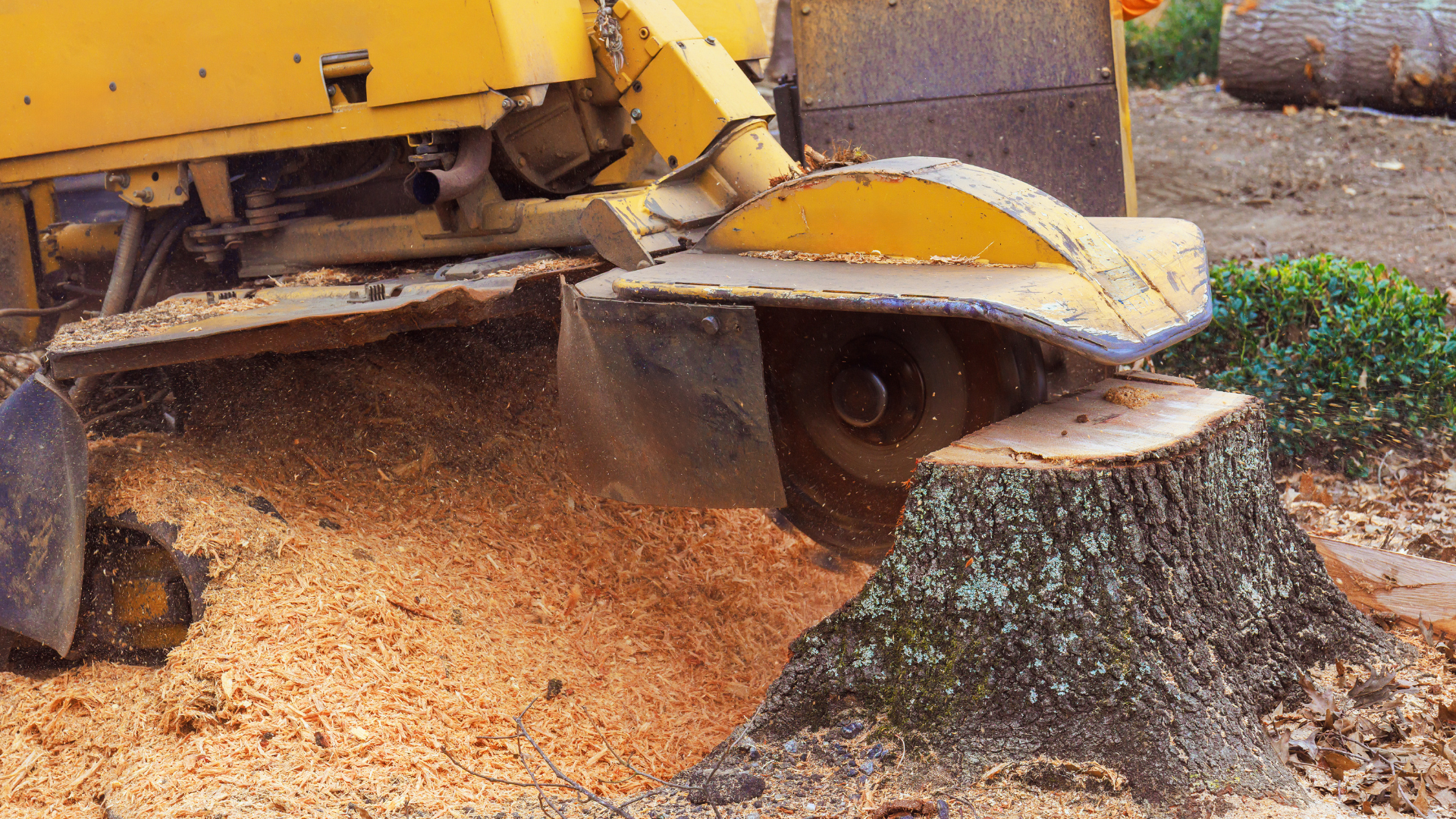
Stump grinding — typically a separate line item: Most removal quotes do not include stump grinding unless explicitly negotiated. Stump grinding ranges from $100 to $450 depending on stump diameter and wood hardness — hardwoods like live oak cost more to grind than softer species. Full root extraction for construction or deep landscaping projects costs more and requires excavation equipment.
Emergency vs. scheduled pricing: Scheduled removal at standard rates is available with typical lead times of several days to several weeks depending on season. Emergency removal — storm damage blocking access, active hazard over a structure — carries a 1.5x to 2x premium for immediate response, after-hours dispatch, and expedited equipment staging.
What the Tree Removal Process Actually Involves
Understanding the removal sequence demystifies the service and sets realistic expectations before the first call:
Step 1 — Assessment and site planning A Branch Boss certified arborist assesses the tree's health, structural integrity, and natural lean before any equipment is positioned. Nearby hazards — power lines, structures, underground utilities, adjacent trees — are mapped and the removal sequence is planned before cutting begins. For Granbury properties, this includes terrain assessment for equipment positioning and erosion risk identification on sloped sites.
Step 2 — Equipment preparation and positioning Equipment selection depends on the specific tree and site: climbing ropes and rigging for tight access situations, bucket truck for standard residential access, tracked equipment for steep slope sites. All equipment is positioned to protect existing landscaping and structures before work begins.
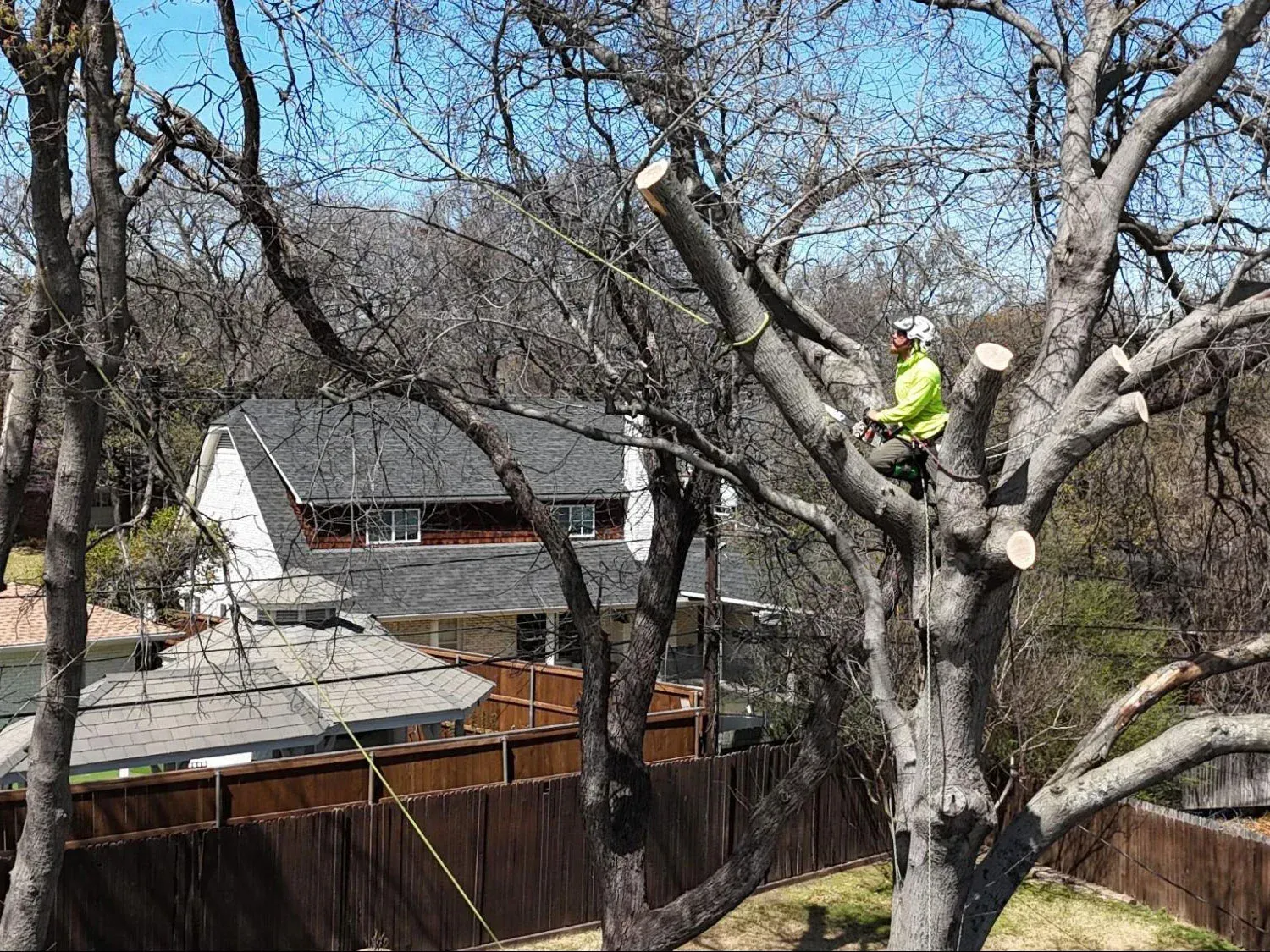
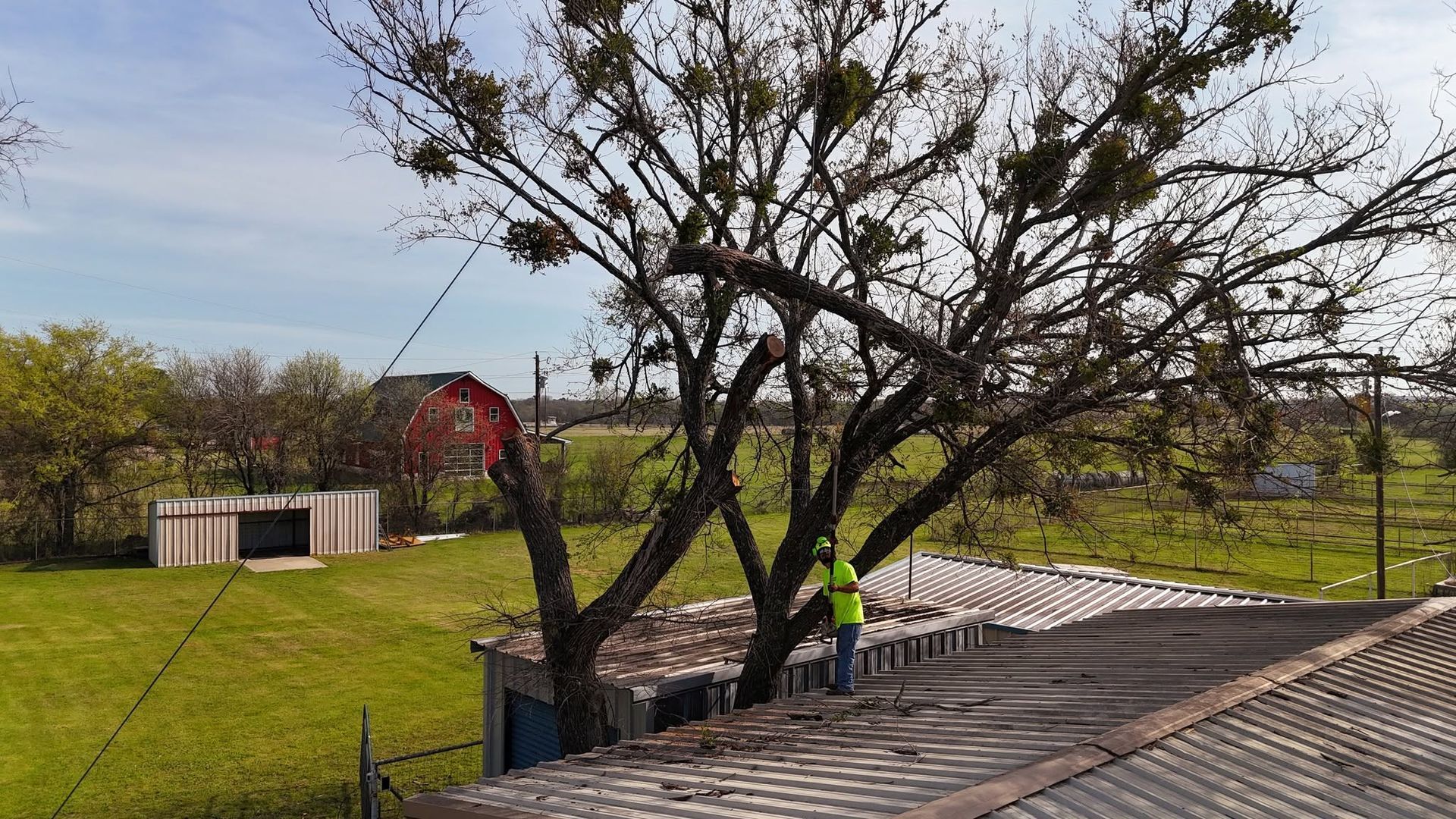
Step 3 — Sectional removal — top-down dismantling Complete felling — cutting the tree at the base and dropping it in one piece — is only appropriate in open areas with no nearby structures or trees. In Granbury's residential and lakeside contexts, sectional removal is the standard methodology: climbers or lift operators remove sections from the top down, with each cut piece rigged and lowered in a controlled descent. This protects structures, fencing, and landscaping that a felled tree would damage.
Step 4 — Debris management Branches are chipped on-site. Trunk sections are cut into manageable pieces — Branch Boss can leave wood cut to length for firewood on request, or haul everything. The site is raked and cleared of all debris and chips before the crew departs.
Step 5 — Stump options Stump grinding shreds the stump to 4 to 12 inches below grade, leaving the root system in place. This is appropriate for most residential situations. Full stump extraction removes the entire root ball — appropriate for construction, hardscape installation, or deep-rooted landscaping plans. Both options are available as add-ons to any Branch Boss removal project.
Storm-Damaged Trees in Granbury — When Removal Is the Right Call vs. When It Can Wait
For Hood County homeowners dealing with storm aftermath — here's the assessment framework:
Remove immediately:
- Main trunk split or cracked — structural integrity is permanently compromised
- Leaning significantly with visible soil heaving or root plate movement — root system failure
- More than 50% of canopy or central leader lost — recovery is not realistic
- Tree position over a structure, driveway, or power line — proximity makes waiting dangerous
Can wait — trim and monitor:
- Healthy mature tree with multiple broken limbs but sound trunk — prune properly and monitor canopy recovery
- Young trees with minor lean from root zone saturation — stake, water aggressively, and monitor
- Trees with significant deadwood from the storm but intact structure — deadwood removal and monitoring
Borderline cases: If the tree's structural status is uncertain after a storm — clean up broken limbs to eliminate the widow maker hazard and give the tree 4 to 8 weeks to leaf out before making a removal decision. A tree that produces a full healthy canopy after storm damage has demonstrated that its vascular system is intact. A tree that leafs out sparsely or shows progressive dieback over the following weeks confirms the removal conversation.
For the full post-storm tree assessment guide for Granbury properties,
read our
storm damage tree cleanup guide →
What Happens After the Tree Is Removed
Site restoration is part of the service — not an afterthought:
Stump and void management Stump grinding leaves wood chip material in the ground void. This material should be mixed with topsoil before backfilling — pure wood chip fill settles significantly as it decomposes and creates ongoing depression in the lawn. For Hood County's clay soils, mix topsoil with coarse compost to improve the backfill drainage characteristics. Expect some surface settling over the first 6 to 12 months as the remaining root system decomposes.
Replanting considerations The footprint of a removed tree is not an ideal immediate replanting location — decaying roots alter soil pH and nitrogen levels, and any disease or pest that contributed to the original tree's removal may persist in the soil. Plant replacement trees 5 to 10 feet from the original location when possible. If replanting in the same area is required, remove the old sawdust and replace with fresh topsoil before planting.
Erosion management on sloped Hood County properties Slope erosion is a genuine post-removal risk on Lake Granbury shoreline properties and hilly Hood County terrain. Immediate soil stabilization after removal on slopes:
- Fill ground depressions completely and compact the soil
- Apply wood chip mulch from the removal as a ground cover on the slope — not deep enough to wash easily but adequate to reduce direct raindrop impact on bare soil
- Install biodegradable jute netting or coir erosion control mats on steeper bare slopes
- Establish native ground cover — Texas sedge or other deep-rooted natives — as quickly as possible to anchor loose topsoil before the first rain event
Branch Boss: Tree Removal Throughout Granbury, Hood County, and Surrounding North Texas
Tree removal in Granbury requires more than equipment and a crew. It requires terrain knowledge, ISA certified assessment, Hood County permit familiarity, and the rigging expertise that storm-damaged trees and lakeside terrain demand. Branch Boss brings all of it — to every project in Granbury, Cleburne, Burleson, and surrounding North Texas.
What every Branch Boss Granbury tree removal includes:
| Service Component | What It Covers |
|---|---|
| ISA certified arborist assessment | Full evaluation before any cutting begins — remove vs. trim vs. treat recommendation |
| Permit research | City of Granbury protected tree permit requirements confirmed before work begins |
| Terrain-appropriate equipment | Tracked equipment, climbing, or bucket truck selected for your specific site conditions |
| Sectional removal methodology | Top-down dismantling with controlled rigging — no uncontrolled felling near structures |
| Full debris management | Chipped on-site or hauled — site raked clean |
| Stump grinding available | Added to any removal project — priced separately by stump diameter |
| Erosion management guidance | Post-removal site restoration recommendations for sloped properties |
| Insurance documentation | Full liability and worker's compensation — certificates available on request |
| Storm damage assessment | Combined removal and storm assessment available for post-weather events |
| Connected to full land services | Land clearing, forestry mulching, and excavation available if the removal reveals a larger scope |
Contact Branch Boss today for your Granbury tree removal assessment.
Don’t wait for the next storm to test your trees.
👉 Worried about a tree near your roof, driveway, or power lines?
Contact Branch Boss Tree Co. today to schedule your summer tree assessment and get expert trimming
that protects your property and peace of mind.
Call us today at
817-487-8448 to let us handle your tree and tree stump removal needs with professionalism and care.