The Tree in Your Yard Isn't the Problem. How It Comes Down Is.
There is no shortage of homeowners in Burleson and Cleburne who have watched a neighbor or a contractor drop a tree and made a mental note: that does not look that complicated. A chainsaw, a clear direction to fall, a little planning. How hard can it be?
The answer is documented in federal safety data. According to the Texas Department of Insurance, tree care injuries account for approximately 80 worker deaths and at least 23,000 chainsaw injuries treated in hospital emergency rooms across the United States every year. Landscape service workers, which include tree care workers, represent less than one percent of the total workforce but account for approximately 3.5 percent of all workplace fatalities. OSHA has identified tree care as one of the highest-risk occupational categories in the country and launched a National Emphasis Program in 2023 specifically focused on reducing fall-related injuries and fatalities in tree work.
These numbers reflect trained professionals with appropriate equipment and years of field experience. The risk profile for an untrained homeowner with a rented chainsaw and a borrowed ladder is substantially higher.
Safe tree removal in Burleson TX is not primarily about the tree. It is about what happens when a tree that weighs several thousand pounds begins to move in a direction that was not planned for. This guide explains what actually makes tree removal dangerous, what professional crews do that changes the outcome, and which situations in Johnson County and the Burleson area demand professional involvement rather than a DIY approach.
Why Tree Removal Is More Dangerous Than It Looks
The visual of a tree falling is deceptively simple. The complexity is in what cannot be seen from the outside: the internal structure of the wood, the tension and compression forces built into every leaning trunk, the root system condition, and the physics of a several-thousand-pound object accelerating toward the ground in a direction influenced by dozens of variables simultaneously.
The four primary hazards that make tree removal in Burleson TX dangerous:
1. Falling objects and struck-by incidents According to data from the Tree Care Industry Association (TCIA), the two event categories that account for the most fatal injuries in tree work are "Contact with Objects or Equipment" and "Falls, Slips, and Trips." Falling branches, kickback from chainsaws, and logs rolling or shifting after cutting account for a significant share of serious injuries in tree removal operations. A branch that appears secured by surrounding limbs can release suddenly as tension changes during the cutting sequence.
2. Unpredictable fall direction Trees rarely fall in a single predictable direction. Internal decay, root damage, uneven weight distribution across the canopy, wind at the moment of release, and the specific geometry of the cut all influence where the tree goes. The Texas Department of Insurance's safety guidance for tree felling notes that fatal incidents during tree felling occur primarily because the chainsaw operator fails to follow a retreat path as the tree lifts, or ground workers are standing too close when the tree begins to fall. Both of these are judgment calls that require training, not assumptions.
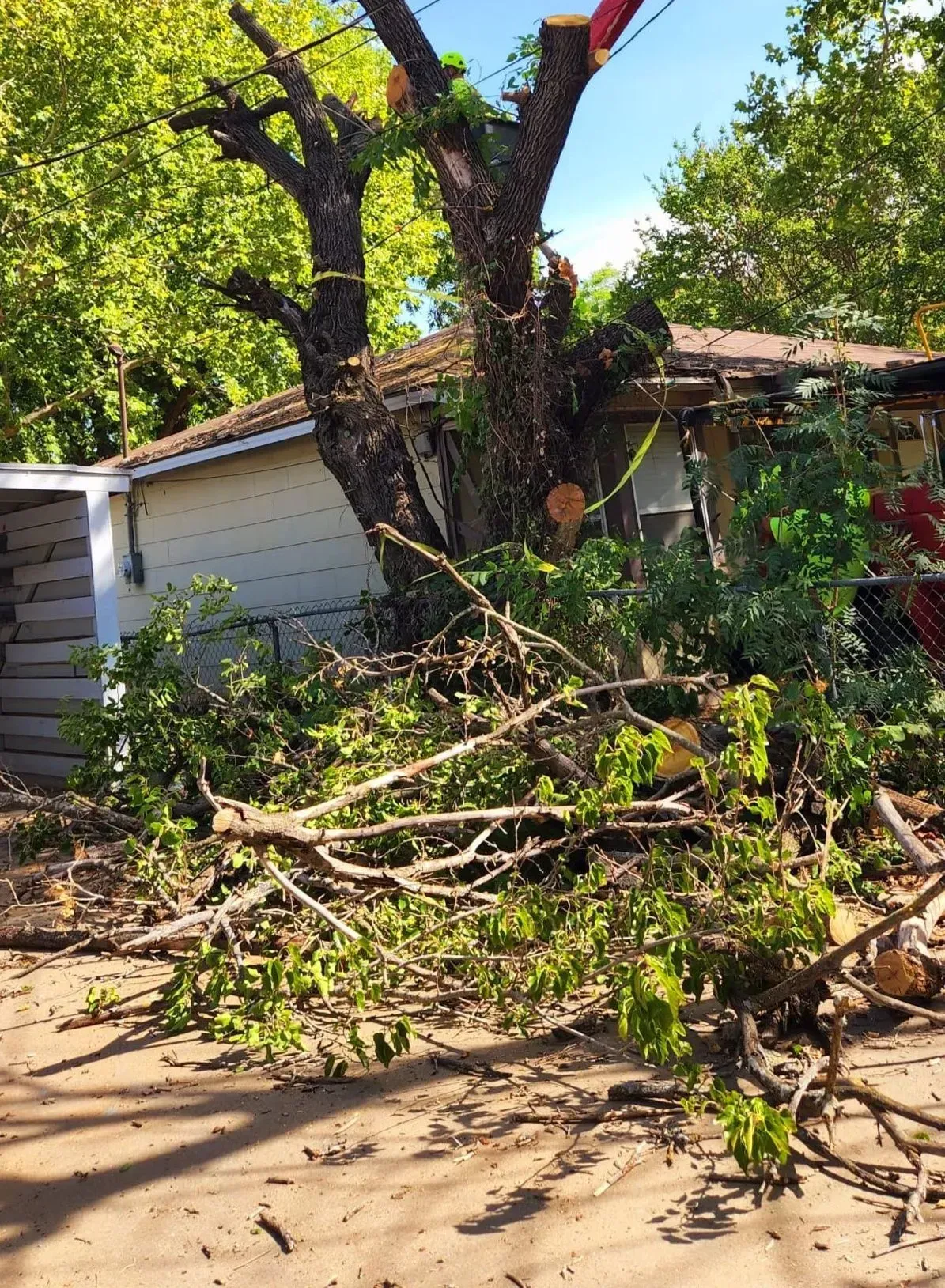
3. Proximity to structures, utilities, and people In established Burleson and Cleburne neighborhoods, tree removal rarely happens in open space. Trees are adjacent to rooflines, fences, utility lines, driveways, and neighboring properties. Every structure in the fall zone represents a complication that changes the removal approach. Utility lines running through or near a tree's canopy add a potentially fatal electrical hazard that requires coordination with the utility provider before any work begins.
4. Hidden structural compromise A tree that looks sound from the outside can have significant internal decay, root damage from construction activity, or compromised wood from disease that is completely invisible during a visual inspection from the ground. North Texas trees, including the live oaks, bur oaks, cedar elms, and pecans common throughout Johnson County, are susceptible to oak wilt, which compromises vascular tissue before causing visible canopy decline. A tree being removed because it looks unhealthy may have internal structural deficits that affect how it behaves during removal in ways that a trained arborist can assess and a homeowner cannot.
What Professional Tree Removal Actually Involves
The difference between a professional tree removal crew and an untrained person with a chainsaw is not primarily about equipment, though equipment matters significantly. It is about the sequence of decisions made before the saw touches the wood.
Site assessment before any cutting begins
A professional crew evaluates:
- Fall zone clearance: Identifying the full zone that could be affected by the tree falling, rolling logs, or debris scatter, and ensuring that zone is clear of people and structures before cutting begins
- Escape routes: Establishing and clearing a retreat path at a 45-degree angle away from the intended fall direction before the first cut, as recommended by industry safety standards
- Utility identification: Confirming whether any overhead or underground utilities are in the work zone and coordinating with providers when needed
- Root zone and soil conditions: Assessing whether root damage, soil saturation from recent rain, or nearby construction has affected the stability of the root plate, which influences how the tree will move when it is cut
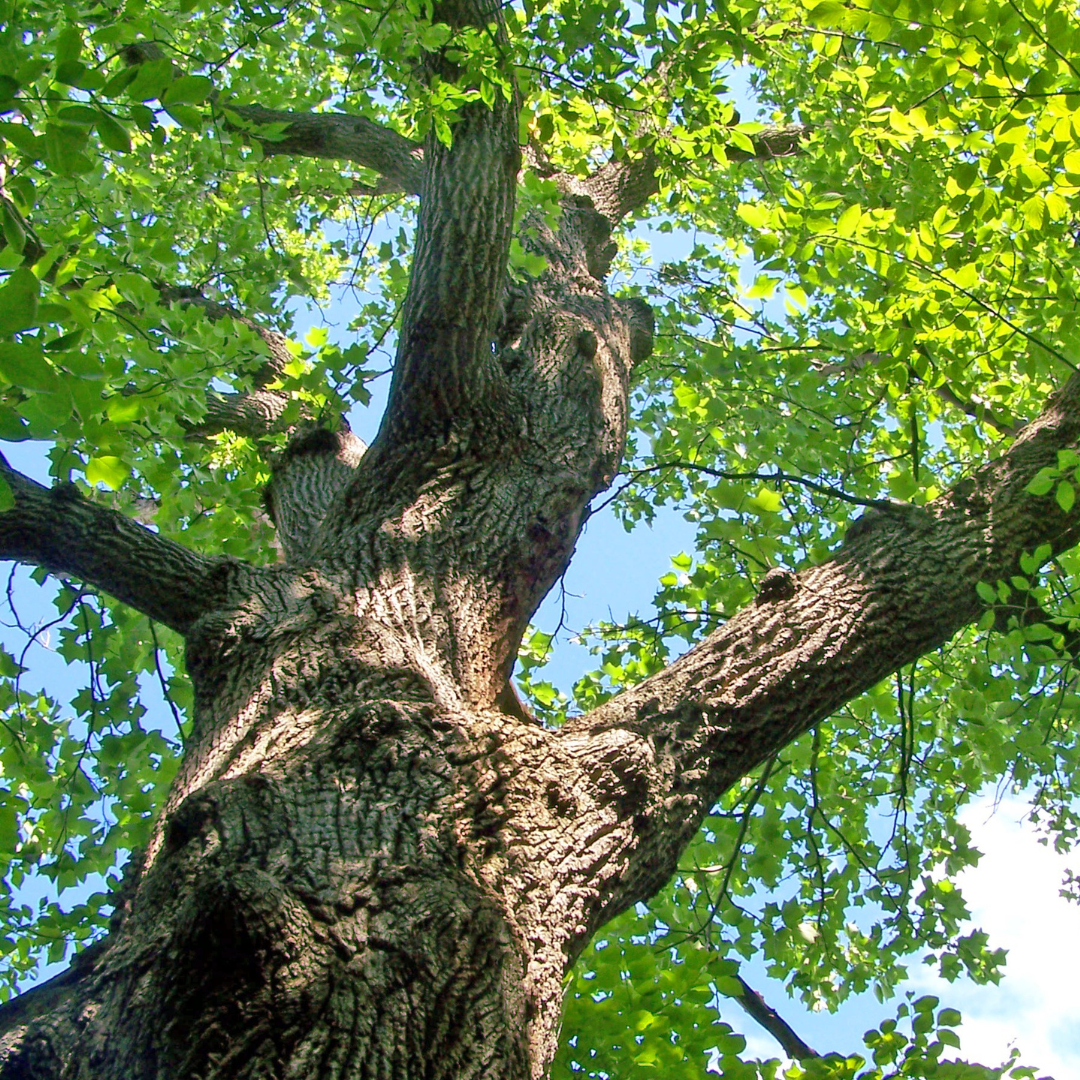
- Internal condition assessment: Looking for indicators of internal decay, including fungal fruiting bodies, soft wood at the base, unusual lean, or prior damage that suggests the tree may not behave predictably when cut
Rigging and controlled descent
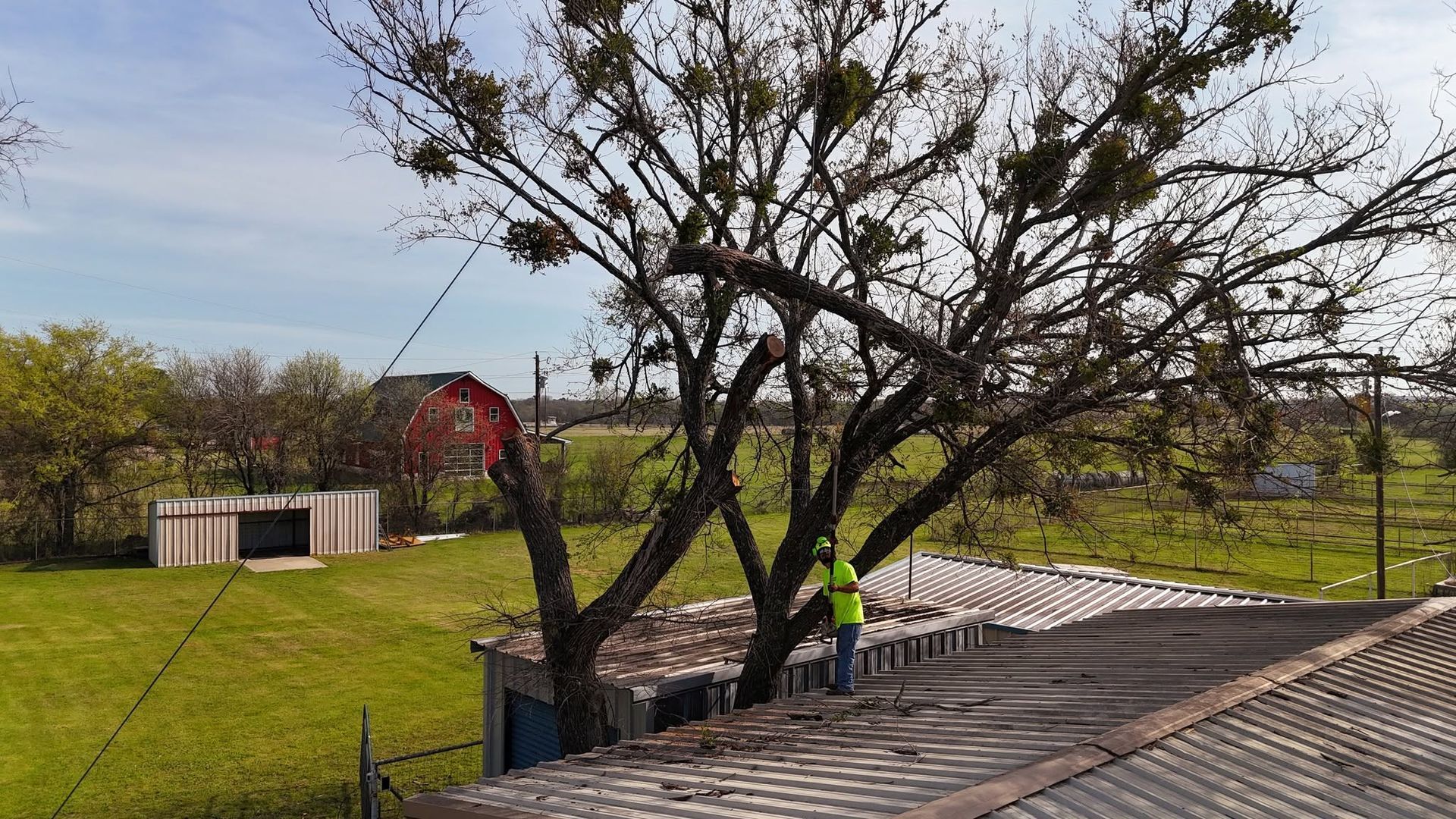
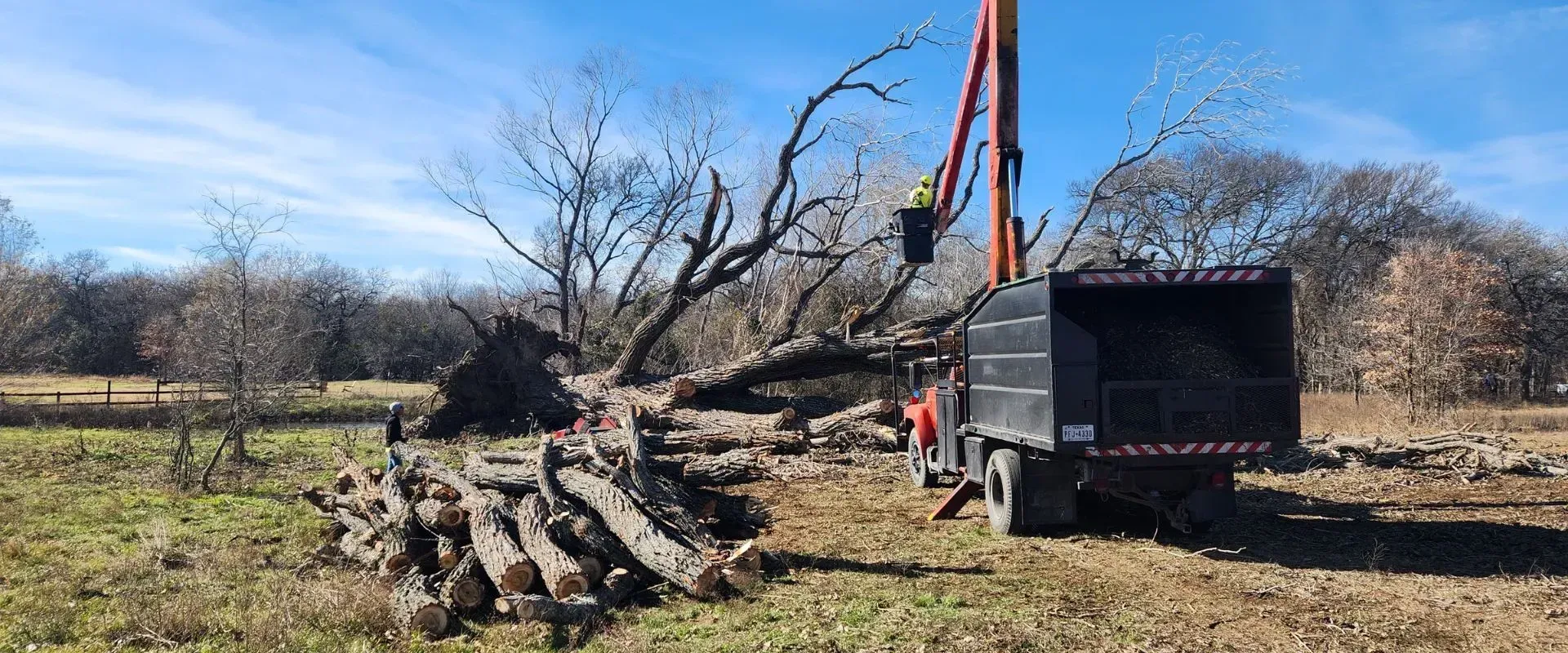
For trees near structures, in confined spaces, or with limited fall zones, professional crews use rigging systems to lower sections of the tree in a controlled sequence rather than dropping the full tree. This involves:
- Climbing or using aerial equipment to access the upper canopy
- Attaching rigging lines to large limbs before they are cut, allowing the crew on the ground to control the descent speed and landing point
- Removing the tree in sections from the top down, eliminating the risk of the full trunk falling in an uncontrolled direction
This approach takes longer and requires more equipment and skill than a simple fell cut. It is also the only approach that reliably protects structures, fences, and neighboring property when a tree's fall zone is constrained.
Stump management
Tree removal does not end when the trunk hits the ground. The stump remaining after removal is a trip hazard, a potential site for pest establishment, and an impediment to replanting or landscaping. Branch Boss Tree Co. handles stump grinding as part of complete removal services, reducing the stump to below grade and producing wood chip material that can be used as mulch or removed from the site.
Trees That Require Professional Removal in the Burleson and Cleburne Area
Some trees can be removed by capable homeowners with appropriate care and equipment. Many cannot. The following situations in the Burleson and Cleburne area represent conditions where professional removal is not optional but essential:
Any tree within striking distance of a structure If the tree is tall enough that any part of it could reach a roof, fence, wall, or vehicle if it fell in any direction, professional removal with appropriate rigging is the correct approach. The cost of removing a tree professionally is consistently less than the cost of repairing the structure it damages if removed incorrectly.
Trees with significant lean toward structures or property lines A tree leaning toward a neighbor's fence or a shared property line has a built-in bias in its fall direction that must be managed, not assumed away. Trees with established lean often have root systems that have developed asymmetrically in response to that lean, which affects how the root plate behaves when the trunk is cut.
Trees showing signs of internal decay or disease Live oaks and red oaks in Johnson County are susceptible to oak wilt, a vascular fungal disease that spreads through root grafts between adjacent trees and through sap-feeding beetles. According to Texas A&M Forest Service, oak wilt can kill a red oak within weeks of infection and spread to neighboring oaks through connected root systems. A diseased tree being removed must be handled with attention to preventing stump sprouting and root graft transmission, which requires knowledge of the disease and appropriate treatment of the stump after removal.
Cedar elms, one of the most common trees in the Burleson area according to North Texas arborist resources, can be susceptible to Dutch elm disease, which spreads through elm bark beetles that breed in dead and dying elm wood. Removing an infected cedar elm requires proper disposal of the wood to prevent beetle emergence and spread to nearby healthy elms.
Trees in contact with or near power lines Any tree removal that involves branches or trunk sections near overhead utility lines must be coordinated with the utility provider. In Texas, unauthorized contact with utility lines is not just dangerous but potentially a legal and liability issue. Branch Boss Tree Co. works with utility providers when tree removal involves proximity to active lines.
Large diameter trees over 24 inches Large-caliper trees carry substantially more weight than smaller trees, require more specialized equipment to section safely, and produce debris volumes that require planning and equipment to manage efficiently. The physics of a large bur oak or pecan tree coming down incorrectly are not recoverable.
What Happens After the Storm: Emergency Removal in Johnson County
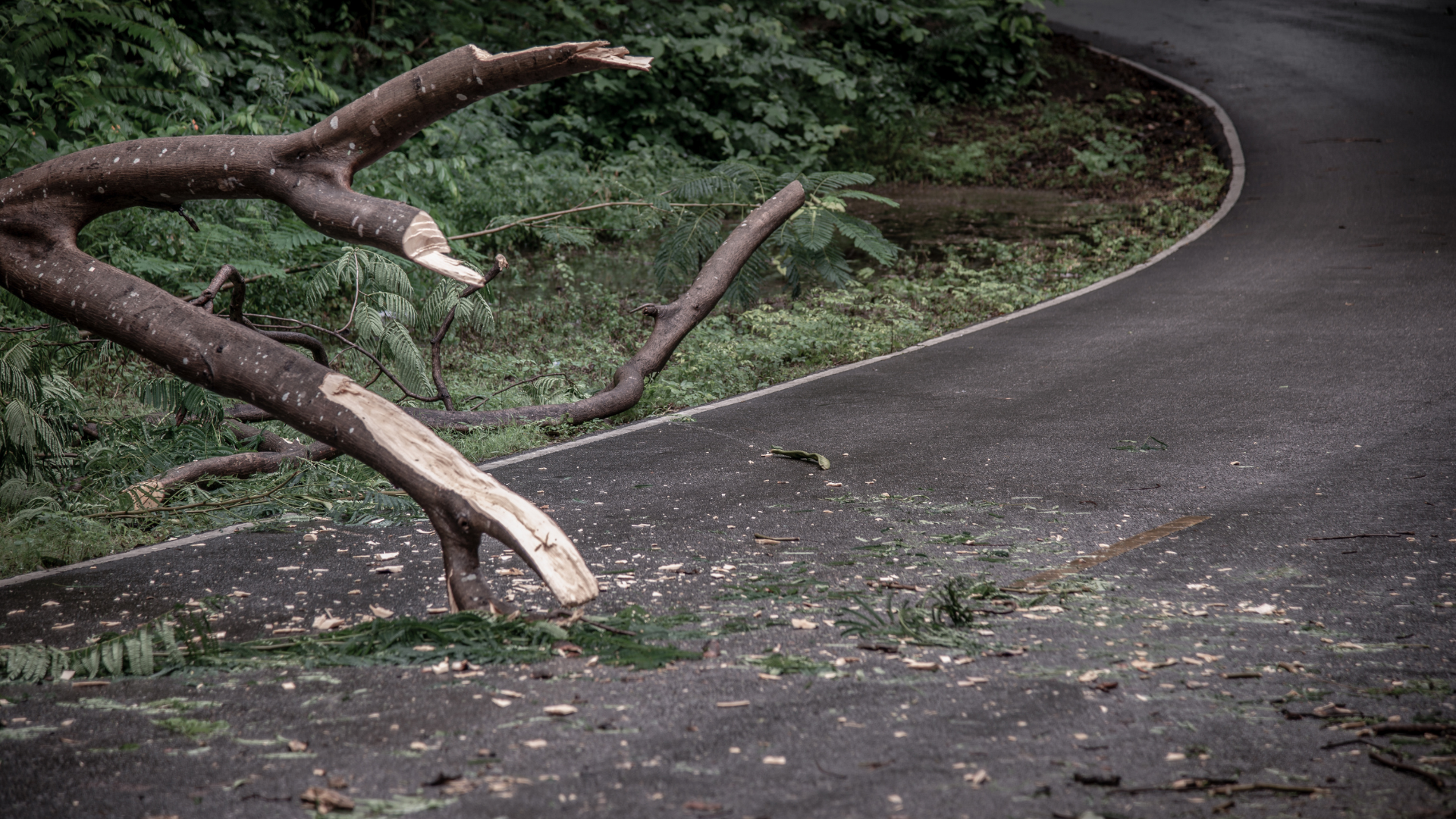
Burleson and Cleburne are in Johnson County, which lies within the North Texas severe weather corridor. The same storm systems that produce hail damage across Tarrant County regularly push through Johnson County with high winds capable of splitting trunks, breaking large scaffold limbs, and uprooting root-compromised trees entirely.
Storm-damaged tree removal carries additional hazards beyond standard removal. A split trunk or partially uprooted tree has internal tension built up that releases unpredictably when cut. The Texas Department of Insurance specifically notes that tree care injuries often increase after storms when unqualified people with chainsaws offer their services to uninformed homeowners. This pattern repeats after every significant storm event in North Texas.
Branch Boss Tree Co. provides emergency tree services throughout Burleson, Cleburne, Granbury, and the surrounding Johnson County communities. Emergency response includes assessment of storm-damaged trees for immediate hazard, safe removal of trees on or threatening structures, and debris clearing from driveways and access points.
The Professional Removal Difference: A Summary
For Burleson TX homeowners weighing professional tree removal against DIY or against hiring an unlicensed crew that shows up after a storm:
- Insurance: A licensed, insured tree service protects the homeowner if damage occurs during removal. An unlicensed crew working without insurance leaves the homeowner liable for any damage or injury on their property.
- Equipment: Professional crews have rigging systems, chippers, stump grinders, and aerial access equipment that change what is possible safely. Rented chainsaws and ladders do not replicate this capability.
- Assessment: The decisions made before the first cut, about fall zones, escape routes, structural condition, and rigging requirements, are where professional training has the most impact on the outcome.
- Cleanup: Professional removal includes complete debris management. The wood, branches, and chips are removed or processed on-site rather than left for the homeowner to manage.
- Liability: A tree that damages a neighbor's property during removal creates legal and financial exposure. A professional crew with appropriate insurance provides protection that a homeowner removing a tree independently does not have.
Branch Boss Tree Co. serves Burleson, Cleburne, Granbury, and the surrounding Johnson County communities with safe, professional tree removal, emergency services, land clearing, and forestry mulching. Free estimates are available for any removal project, with honest assessment of what the job requires and what it will cost before any work begins.
Don’t wait for the next storm to test your trees.
👉 Worried about a tree near your roof, driveway, or power lines?
Contact Branch Boss Tree Co. today to schedule your summer tree assessment and get expert trimming
that protects your property and peace of mind.
Call us today at
817-487-8448 to let us handle your tree and tree stump removal needs with professionalism and care.