Storm Season Prep for North Texas Trees
North Texas doesn't ease into storm season — it arrives fast and hits hard. From March through June, Cleburne, Burleson, and the surrounding DFW area face some of the most severe weather in the country: straight-line winds, large hail, tornadoes, and flash flooding that can turn a healthy-looking tree into a property hazard overnight. The cost of proactive tree care before storm season is a fraction of what emergency cleanup, roof repair, and storm damage restoration costs after. Branch Boss helps North Texas homeowners get ahead of storm season with professional tree assessments, pruning, and hazard removal — before the first warning siren sounds

Understanding North Texas Storm Season
Peak storm season in North Texas runs from March through June — and the threats are varied and serious:
| Storm Threat | What It Does to Trees |
|---|---|
| Straight-Line Winds | Often as destructive as small tornadoes — can snap large limbs, split trunks, and uproot entire trees |
| Saturated Soil | Heavy rain combined with North Texas clay reduces oxygen flow, causes root rot, and makes trees dramatically more vulnerable to uprooting |
| Hail Impact | Damages bark, defoliates canopies, and creates entry wounds for disease and fungal infection |
| Tornadoes | Direct structural destruction — no amount of preparation eliminates risk entirely, but reducing hazard trees limits damage to your property |
Why Healthy-Looking Trees Are Hidden Hazards
This is the part most North Texas homeowners don't expect: the trees most likely to fail in a storm aren't always the ones that look sick. A full green canopy can hide serious structural problems that only reveal themselves when 60 mph winds arrive.
| Hidden Hazard | What's Actually Happening |
|---|---|
| Internal Decay | Rot inside the trunk — similar to structural decay in a building — goes unnoticed until storm stress causes sudden failure |
| Root Damage & Compaction | Overwatering, poor drainage, or nearby construction activity weakens the root system underground where it can't be seen |
| Included Bark (V-shaped unions) | A weak, V-shaped attachment between trunks or major branches that looks sound but is structurally brittle and prone to splitting |
| Delayed Failure | Weakened trees may survive the storm itself but fall hours or days later as saturated soil dries, shifts, and loses its grip on the root system |
Signs a Tree Is a Storm Risk Before Season Starts
Walk your property now and look for these warning signs before storm season peaks:
Structural Warning Signs:
- Dead or hanging branches — called "widow makers" for good reason. These fail first in high winds
- Trunk cracks and splits — deep vertical splits or large seams with peeling bark indicate structural failure is likely under storm stress
- V-shaped branch unions — narrow, tight crotches between limbs are far weaker than U-shaped unions and split easily under wind load
Root & Stability Warning Signs:
- New or increasing lean — especially after recent rain. Soil lifting, cracking, or exposed roots on the opposite side of the lean indicates root system failure. A lean exceeding 15 degrees is generally considered unsafe
- Shallow roots in saturated soil — North Texas clay holds water and reduces root oxygen, making surface-rooted trees particularly vulnerable
- Mushrooms or fungal conks at the base or along the trunk — these signal internal decay that compromises structural strength
Location Warning Signs:
- Trees with canopies overhanging rooflines, garages, or fences
- Trees within striking distance of power lines
- Overgrown canopies acting like a sail in high winds — catching and transferring wind force directly to the trunk and root system
Trees Most Vulnerable in North Texas Storms
Not all trees carry equal risk. These species are the most common storm hazards in the Cleburne and Burleson area:
| Tree Species | Why It's High Risk |
|---|---|
| Bradford Pear | Notorious for narrow, weak V-shaped branch angles that split or collapse under wind and ice. Often drops massive limbs or splits down the center entirely |
| Silver Maple | Fast-growing but weak-wooded and brittle with shallow roots — fails easily in windstorms and under ice loads |
| Pecan | Common throughout North Texas but brittle wood makes major limb failure likely under high winds or ice accumulation |
| Cottonwood & Poplar | Drop large sections without warning — extremely high risk when located near structures |
| Leyland Cypress & Arizona Ash | Susceptible to disease and poor structural integrity under North Texas conditions |
How to assess your specific tree's risk:
- Check the union shape — V-shaped forks are weak and split easily. U-shaped unions are far more structurally sound
- Look for bark cracks, missing limbs, or fungal growth — all indicators of internal decline
- Inspect the root zone — heaving soil, exposed roots, or visible decay at the base are serious warning signs
- Know the disease history — trees already fighting Fire Blight, Hypoxylon canker, or other disease are significantly more likely to fail in a storm
Get a formal risk assessment from an ISA Certified Arborist for any large, mature, or structurally suspect tree near your home or structures
Pre-Storm Season Tree Care Checklist
Here's exactly what Branch Boss recommends before North Texas storm season peaks:.
| Priority | Task | Why It Matters |
|---|---|---|
| 1 | Schedule professional pruning | Removes dead, weak, and overhanging branches that become projectiles in high winds |
| 2 | Consider cabling large limbs | Reinforces weak attachment points on trees worth preserving — an arborist can assess which limbs need support |
| 3 | Inspect for decay and disease | Hollow trunks, fungal growth, and cracked bark need professional assessment before storm season |
| 4 | Mulch and water management | Fresh mulch retains moisture, regulates soil temperature, and improves soil structure — keeping roots stable |
| 5 | Trim canopy overhang | Create at least 10 feet of clearance around structures — reduces direct impact risk significantly |
| 6 | Clear drainage systems | Ensure gutters and drainage channels are clear to prevent soil saturation around root zones |
| 7 | Remove debris and dead vegetation | Anything on the ground can become airborne — clear the yard before storm season begins |
After the Storm: What to Do First
If a storm has already caused tree damage on your North Texas property, here's how to respond safely:
Safety First — Always
- Treat every downed line as live. Never approach a tree in contact with a power line under any circumstances — call your utility provider immediately
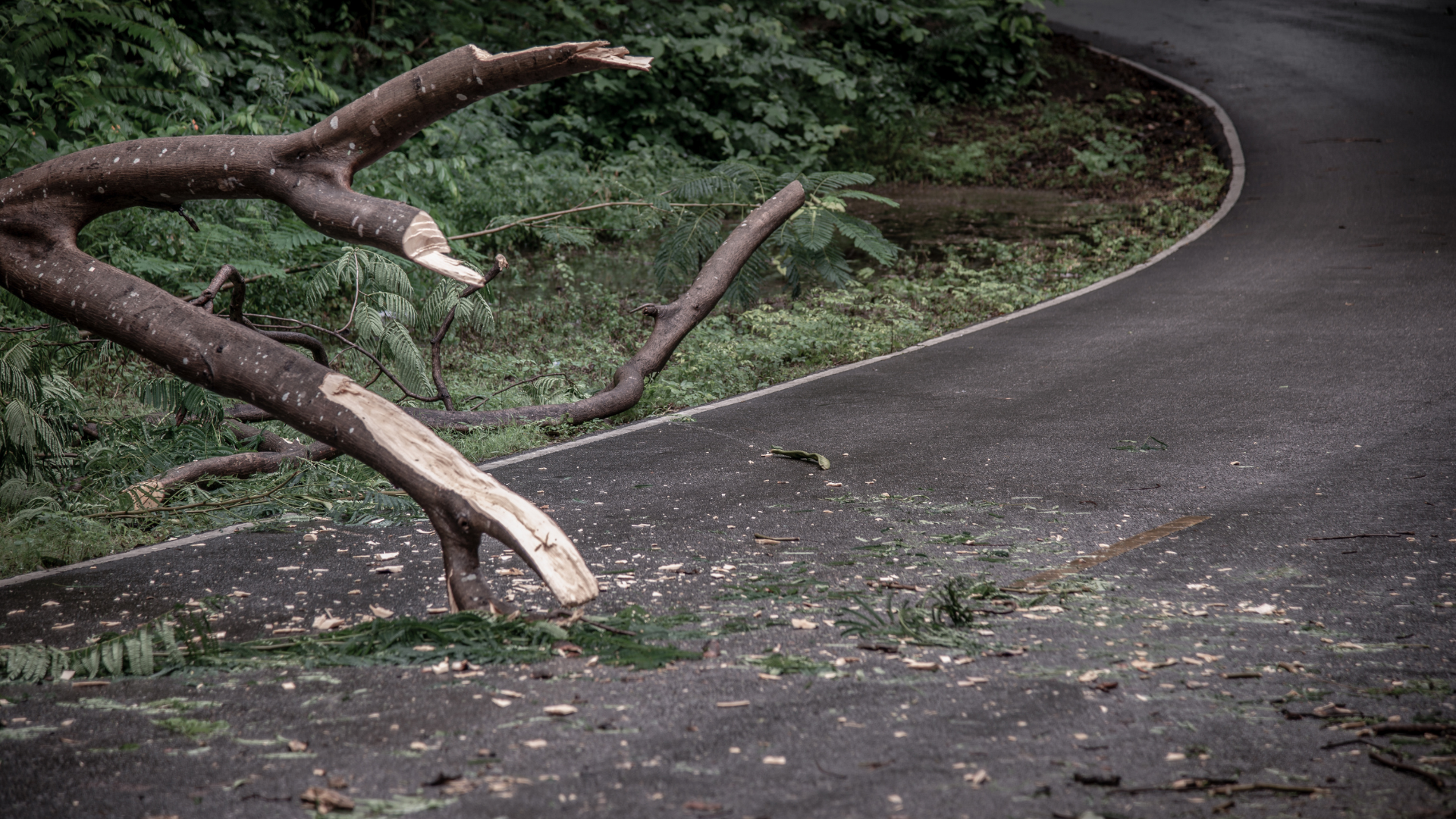
- Do not attempt to prune or remove damaged trees yourself. Tensioned wood under stress can snap back violently and cause serious injury
- Stay clear of leaning trees — delayed failure is common in the hours and days after a storm as soil shifts
Document Before You Touch Anything Photograph all damage from a safe distance before any debris removal begins. This documentation is essential for insurance claims and should be completed before any cleanup or repairs.
Emergency vs. Can Wait:
| Emergency — Call Branch Boss Immediately | Can Wait — Non-Emergency |
|---|---|
| Trees resting on or against your home | Minor twig and small branch breakage |
| Trees tangled in power lines | Debris scattered across lawn |
| Trees with a sharp new lean after the storm | Stable trees with cosmetic damage |
| Hanging widow-maker limbs over walkways or driveways | Trees that appear structurally sound |
First Steps After the Storm:
- Confirm everyone is safe and check for gas leaks before anything else
- Report downed power lines to your utility provider immediately
- Photograph all tree and property damage from a safe distance
- Cover broken windows or damaged roof sections only if it is safe to do so
- Call Branch Boss for professional assessment and removal — don't attempt cleanup on damaged trees without an arborist evaluation
Don't Wait for the First Storm Warning
By the time a tornado watch appears on your phone, it's too late to prepare your trees. The structural issues that cause the most damage — internal decay, weak branch unions, shallow root systems — are invisible until it's too late. A pre-storm assessment from Branch Boss takes the guesswork out of storm readiness and protects your property, your family, and your neighbors.
Contact Branch Boss today for a pre-storm tree assessment in North Texas before severe weather season peaks.
Schedule Your Pre-Storm Tree Assessment →
Don’t wait for the next storm to test your trees.
👉 Worried about a tree near your roof, driveway, or power lines?
Contact Branch Boss Tree Co. today to schedule your summer tree assessment and get expert trimming
that protects your property and peace of mind.
Call us today at
817-487-8448 to let us handle your tree and tree stump removal needs with professionalism and care.