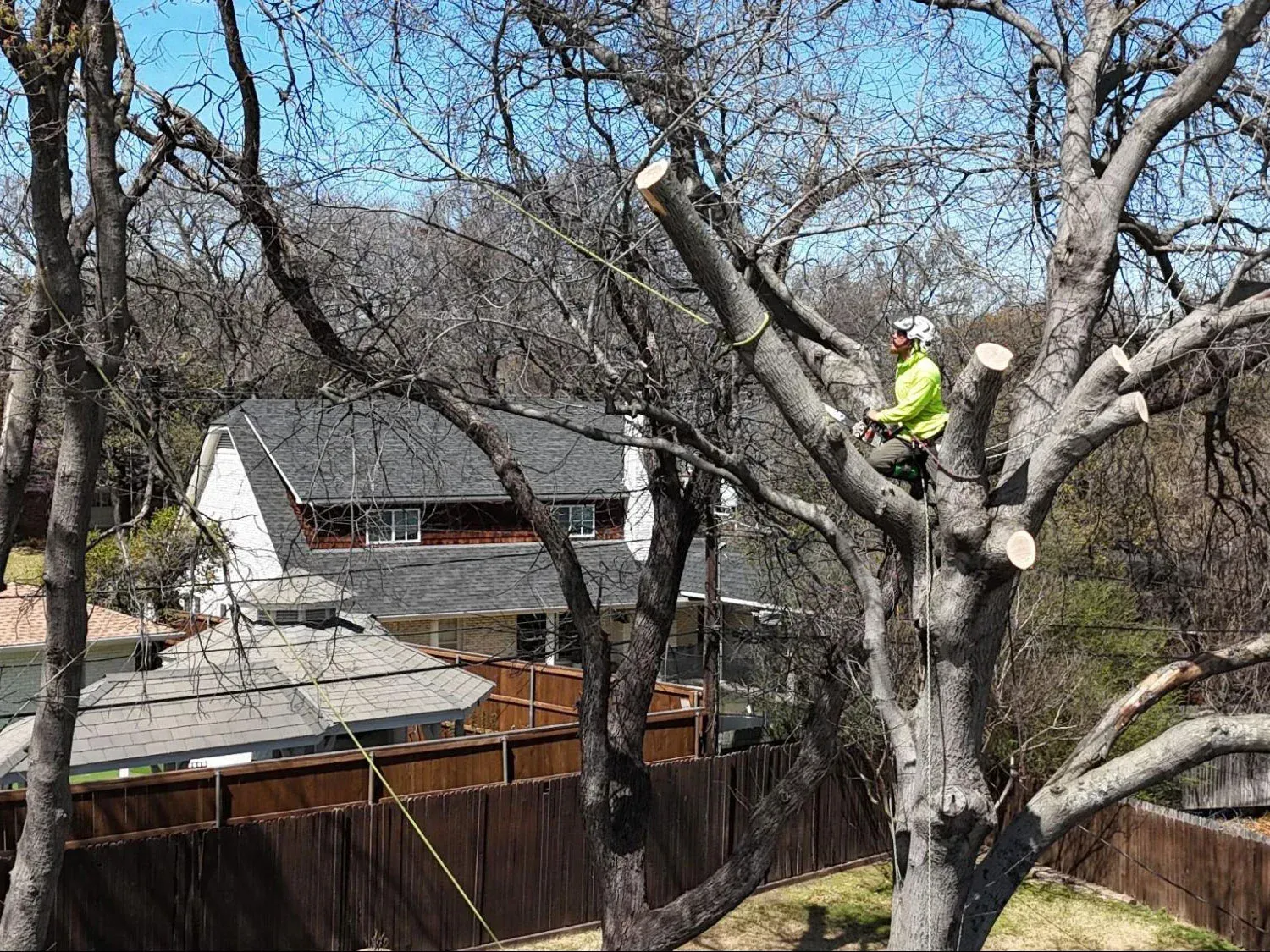
How Weather Conditions in North Texas Affect Tree Health and What Homeowners Can Do About It
North Texas trees deal with more than one kind of weather stress. A mature oak in Granbury may spend weeks under extreme summer heat, then take on heavy rain, saturated soil, straight-line wind, hail, and lightning in the same season. A tree can survive any one of those conditions and still decline when the stresses begin stacking on top of each other.
At Branch Boss Tree Co., we look at
tree health in Granbury, TX as a combination of weather history, soil condition, species, structure, and what the tree is showing now. Education comes before removal. Some trees need pruning, watering changes, or monitoring. Others have structural damage that makes removal the safer option. The goal is to understand what changed before deciding what the property needs.

North Texas Weather Creates Multiple Types of Tree Stress
Granbury and Hood County sit in a part of North Texas where long hot summers, periodic drought, severe thunderstorms, high winds, hail, and sudden heavy rainfall can all affect tree condition. The
National Weather Service Fort Worth office regularly tracks extreme summer heat and severe thunderstorms across North and Central Texas, including storms capable of damaging winds and hail.
How North Texas Weather Affects Trees
| Weather Condition | What It Does to the Tree | What Homeowners May Notice |
|---|---|---|
| Extreme heat | Increases water loss and canopy stress | Wilt, scorch, thinning leaves |
| Drought | Reduces water uptake and weakens fine roots | Early leaf drop, browning, dieback |
| Heavy rain | Saturates soil and reduces root stability | Leaning, soil movement, exposed roots |
| High wind | Loads trunks and branch unions | Cracks, broken limbs, new lean |
| Hail | Damages leaves, bark, and young growth | Shredded foliage, bark wounds |
| Lightning | Can damage internal tissue and bark | Splits, bark loss, canopy decline |
| Rapid weather swings | Adds repeated stress before recovery | Slow decline across multiple seasons |
August Heat and Drought Can Keep Affecting Trees After Summer Ends
By August, mature trees across Granbury, Cleburne, Burleson, and Johnson County may already have spent months under high temperatures and inconsistent rainfall. The Texas A&M Forest Service explains that severe drought can have long-term effects because fine feeder roots may die, leaving trees stressed even after moisture returns.
That delayed response is important. Homeowners often expect a tree to recover as soon as the weather cools or rain returns, but drought stress can make trees more vulnerable to secondary insects, root problems, and canker diseases for months or even years. Our related guide, Beat the Burn: How to Protect Your Trees from Texas Heat Waves in Cleburne, explains why deep watering and careful summer management matter before decline becomes severe.
Common heat and drought stress signs include:
- Wilting during the hottest part of the day
- Brown or scorched leaf edges
- Early leaf drop
- Sparse canopy growth
- Small or malformed leaves
- Dead twig tips
- Reduced new growth
- Increased insect activity on an already stressed tree

Heavy Rain Can Be Just as Hard on Roots as Drought
North Texas weather can shift quickly from dry soil to intense rainfall. Clay-heavy soils common across Hood County and Johnson County can hold water differently than sandy soils, and saturated ground can reduce the amount of oxygen available to roots while also weakening the soil's ability to anchor a large tree.
Watch the base of the tree after heavy rain for:
- New soil cracking
- Root plate movement
- Exposed roots
- Soil heaving on one side
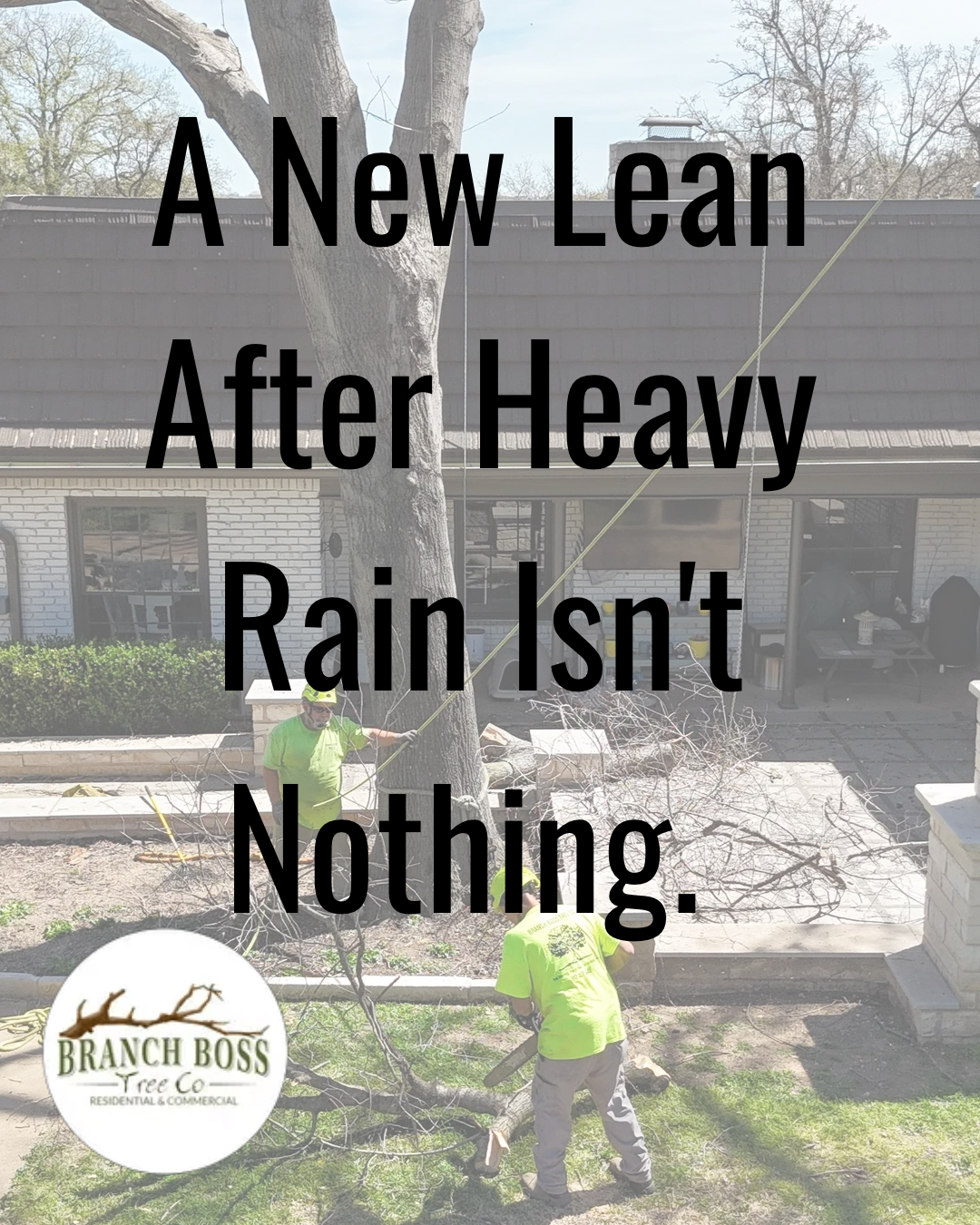
- A new lean
- Water standing around the trunk for long periods
- Mushrooms or fungal growth around the root zone
A tree that begins leaning after saturated conditions deserves more attention than a tree that has held the same natural lean for years. New movement means something changed below ground, and that change may matter even if the canopy still looks healthy.
Storm Damage Is Not Always Obvious From the Ground
A major North Texas storm can damage more than the branches that actually fall. The National Weather Service Fort Worth office documented a multi-day severe weather outbreak in April 2026 that included damaging wind, hail, and tornado-producing storms across the region. Those conditions put tremendous mechanical force on large trees.
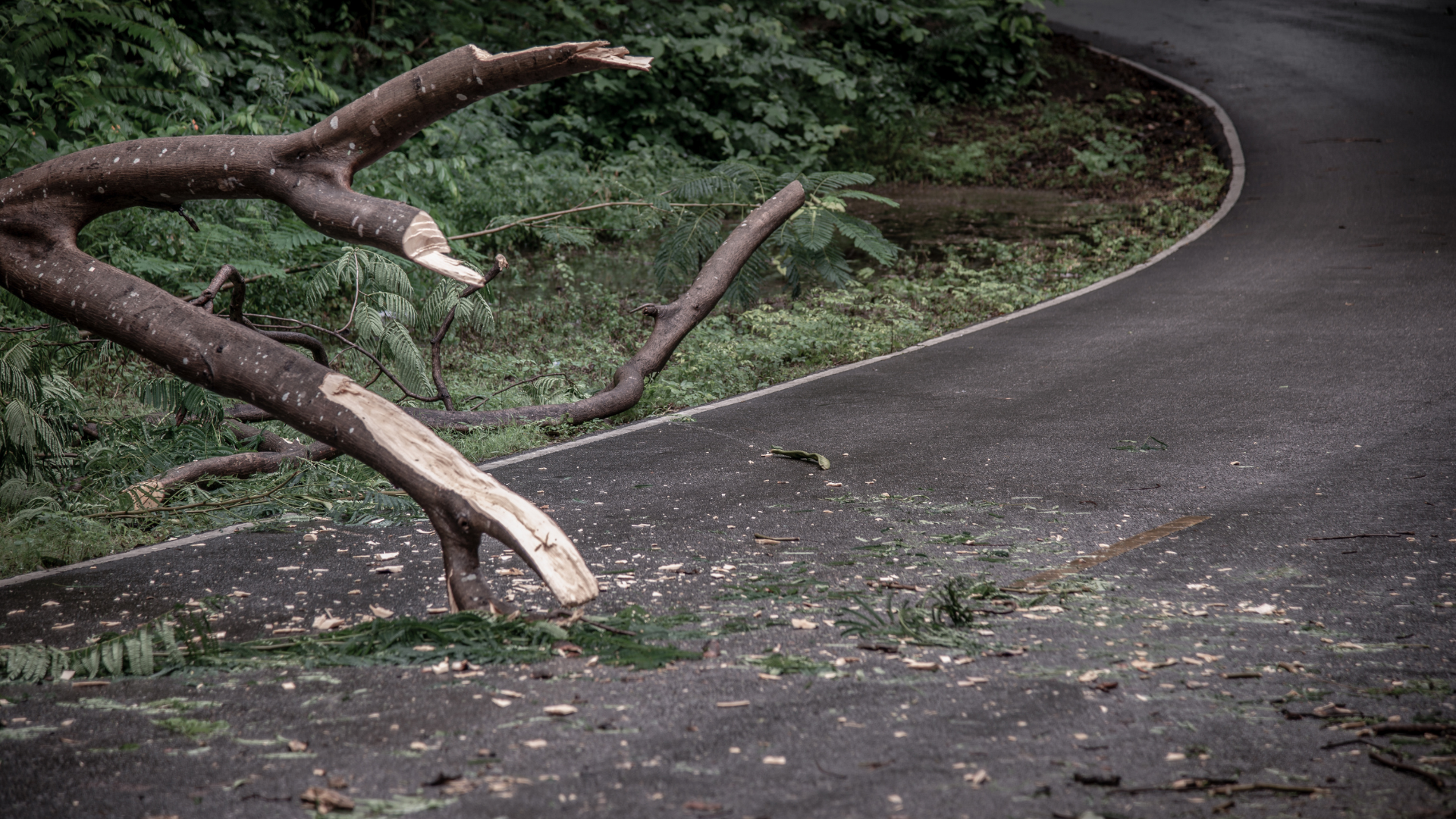
After a storm, we look beyond the debris on the ground. Cracks at branch unions, partially detached limbs, split trunks, root movement, and branches hung up in the canopy can all create problems that are difficult to judge safely from below.
After severe weather, look for:
- A lean that was not present before
- Cracks in the trunk or major unions
- Hanging or suspended limbs
- Freshly exposed wood
- Broken tops
- Soil lifting around the roots
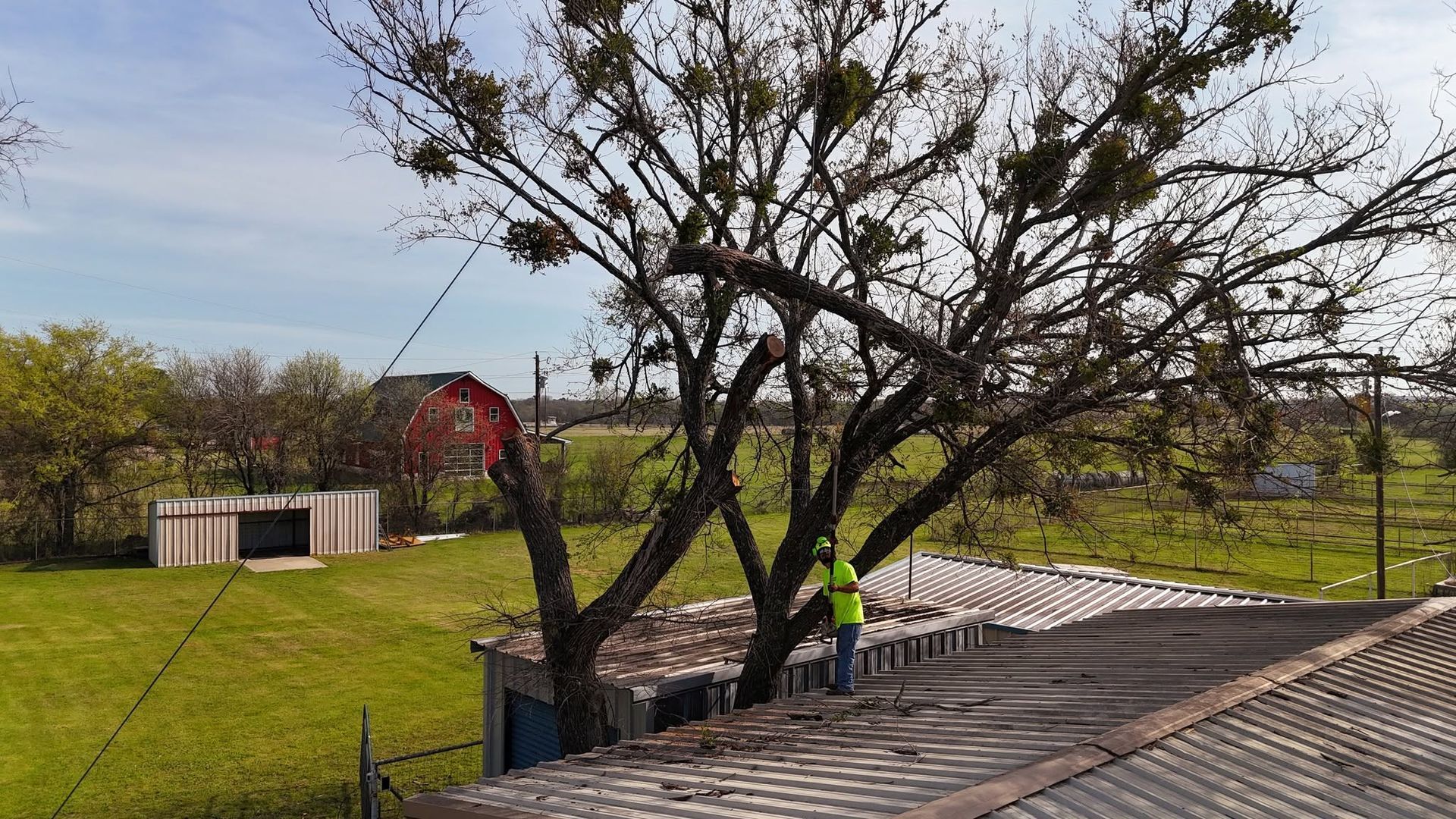
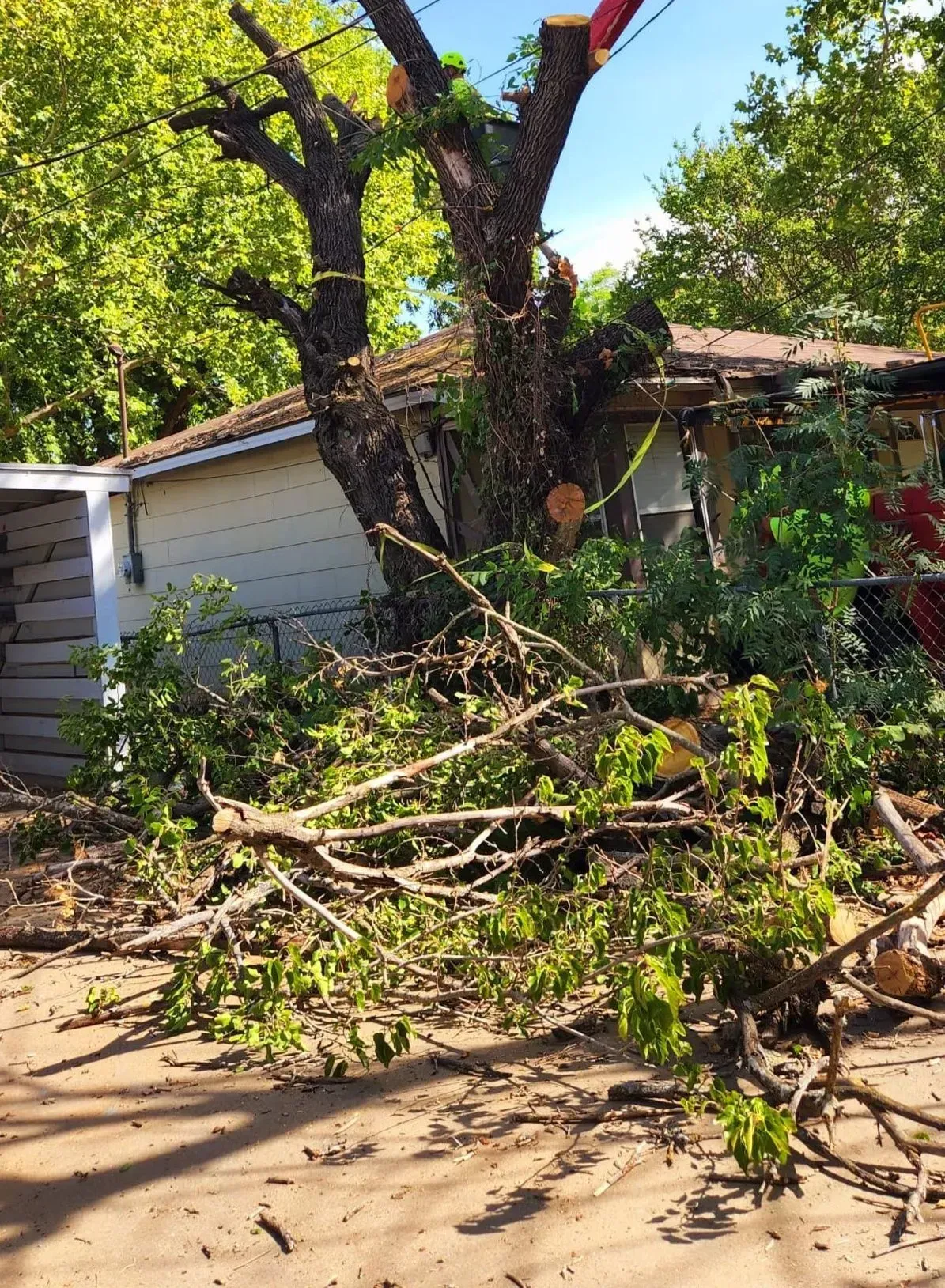
- Large branches resting on roofs or power lines
- Canopy sections that suddenly look uneven
If a tree has already failed, our guide on
what to do after a tree falls on your property in Granbury explains the first safety and cleanup decisions after a storm.

Trim, Monitor, or Remove: Weather Damage Does Not Have One Answer
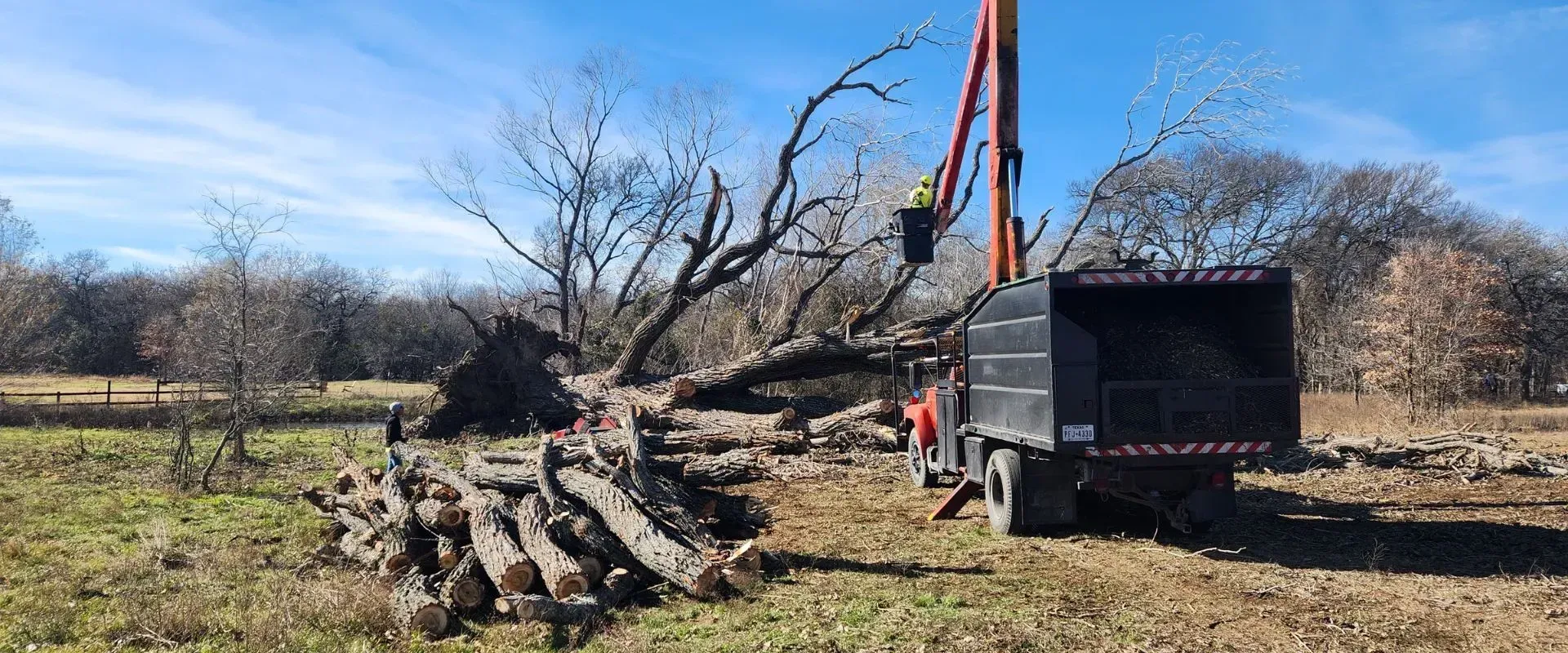
Not every weather-damaged tree needs to come down. A healthy tree with limited deadwood or one damaged limb may be a pruning and monitoring situation. A tree with major root movement, a split trunk, extensive decay, or structural failure near a home may be a removal situation.
At Branch Boss, we make the recommendation based on what the tree is actually telling us, not on a blanket rule.
A Practical Tree-Health Decision Framework
| Condition | Likely Next Step |
|---|---|
| Minor deadwood, otherwise healthy structure | Prune and monitor |
| Heat stress with living canopy and stable structure | Support recovery and reassess |
| One storm-damaged limb | Corrective pruning may be enough |
| Repeated limb failures | Structural assessment |
| New lean after saturated soil | Prompt assessment |
| Large trunk split | Removal may be the safer option |
| Major root plate movement | Urgent evaluation |
| Extensive dead canopy and decay | Removal is often appropriate |
Our article on
identifying and removing hazardous trees before they cause damage goes deeper into the structural warning signs that change the conversation from routine tree care to hazard management.
What Homeowners Can Do to Help Trees Recover
The right response depends on the cause of stress. Watering a structurally damaged tree will not fix a cracked trunk, and aggressive pruning will not correct a drought problem. Tree care works best when the treatment matches the actual stress.
For heat and drought stress:
- Water deeply rather than applying frequent shallow irrigation
- Focus water over the root zone, not directly against the trunk
- Use a 2- to 3-inch layer of organic mulch where appropriate
- Keep mulch away from direct trunk contact
- Avoid unnecessary root disturbance
- Avoid heavy pruning during severe drought unless safety requires it
The
Texas A&M Forest Service recommends supplemental watering during extended dry periods and notes that mulch can reduce soil-moisture loss. The same source warns that drought effects can linger, which is why recovery should be monitored over time rather than judged after one rainfall.
When a Professional Tree Health Assessment Makes Sense
A homeowner can spot many warning signs, but some conditions are difficult to evaluate safely from the ground. Mature oaks and pecans can carry large loads high in the canopy, and internal decay may not be obvious from the outside.
A tree health assessment in Burleson, TX, Granbury, Cleburne, or Midlothian makes sense when the tree has been through severe weather, has developed new symptoms, or sits close enough to a home, driveway, fence, road, or other target that failure would create a meaningful problem.
That is where
tree health care in Cleburne, TX and surrounding North Texas communities becomes a decision process rather than a one-service recommendation.
What Does Weather-Related Tree Service Cost in Granbury?
There is no responsible flat price for tree service in Granbury, TX because weather-related tree work can range from a simple pruning visit to a complex removal involving rigging, heavy equipment, nearby structures, difficult access, or emergency response.
What Changes Tree Service Cost?.
| Cost Factor | Why It Matters |
|---|---|
| Tree size and species | Larger, heavier trees require more labor and equipment |
| Tree condition | Dead, split, or unstable trees require added control |
| Access | Fences, slopes, lakefront lots, and tight yards affect equipment setup |
| Proximity to structures | Roofs, vehicles, roads, and utilities increase complexity |
| Type of work | Pruning, removal, cleanup, and stump grinding have different scopes |
| Storm damage | Broken or suspended limbs can require specialized handling |
| Emergency response | 24/7 storm work may require immediate mobilization |
| Cleanup volume | Large canopies and debris increase handling time |
The best estimate starts with an inspection. That allows us to separate what is necessary for safety from what is optional maintenance.
Frequently Asked Questions
Can a heat-stressed tree recover without being removed?
Yes. Many heat-stressed trees can recover when the trunk, roots, and major structure remain sound. The right response may involve deep watering, mulch, reduced disturbance, selective pruning, and monitoring rather than removal.
How do I know if a tree was damaged by a storm?
Look for new leaning, cracks, hanging limbs, exposed wood, broken tops, root movement, and sudden changes in canopy balance. Some storm damage is difficult to see from the ground, especially in mature trees.
Should I trim a drought-stressed tree in August?
Avoid unnecessary heavy pruning during extreme drought or heat. Dead, broken, or hazardous limbs may still need attention, but healthy live growth should not be removed aggressively unless there is a clear reason.
Can heavy rain make a previously healthy tree unstable?
Yes. Saturated soil can reduce root anchorage, especially if roots were already compromised by drought, decay, construction, or previous storms. A new lean or soil movement after heavy rain should be evaluated.
When does a weather-damaged tree need to be removed?
Removal becomes more likely when there is major root movement, a severe trunk split, extensive decay, a large dead canopy, repeated structural failure, or a condition where the remaining tree cannot be made reasonably safe through pruning or monitoring.
Protect Tree Health Before the Next Weather Extreme
North Texas weather does not affect every tree the same way. Species, age, root condition, soil, previous drought, pruning history, and exposure all change how a tree responds to heat, storms, and heavy rain. That is why the best tree-care decision starts with assessment rather than assuming every damaged tree needs trimming or removal.
If you are dealing with heat stress, storm damage, a leaning tree, dead limbs, or another tree-health concern in Granbury, Hood County, Cleburne, Burleson, Midlothian, or Johnson County, we can evaluate the property and recommend the safest, most practical next step.
Don’t wait for the next storm to test your trees.
👉 Worried about a tree near your roof, driveway, or power lines?
Contact Branch Boss Tree Co. today to schedule your summer tree assessment and get expert trimming
that protects your property and peace of mind.
Call us today at
817-487-8448 to let us handle your tree and tree stump removal needs with professionalism and care.