5 Signs a Tree Near Your Home May Need Removal
Removing a tree is not the goal. A healthy, established tree adds value, shade, and character to a Granbury property, and a good tree company works to preserve trees whenever it responsibly can. But some trees, especially ones close to a house, driveway, or power line, reach a point where the risk they pose outweighs what can be saved, and knowing how to spot that point is what keeps a manageable situation from becoming an emergency.
Right now is a good time to look. Months of North Texas summer heat and drought stress leave trees weakened, and the tail end of storm season heading into fall tends to expose the trees that were already struggling. A tree that has quietly declined over the summer is exactly the one most likely to fail when the next round of storms rolls through Hood County.
Branch Boss Tree Co. serves Granbury, Cleburne, Burleson, and the surrounding Hood County and Johnson County communities. This guide covers five signs that a tree near your home may need removal, drawn from how professional arborists actually assess tree risk, with an honest note on when a tree can still be saved.
1. A New or Worsening Lean
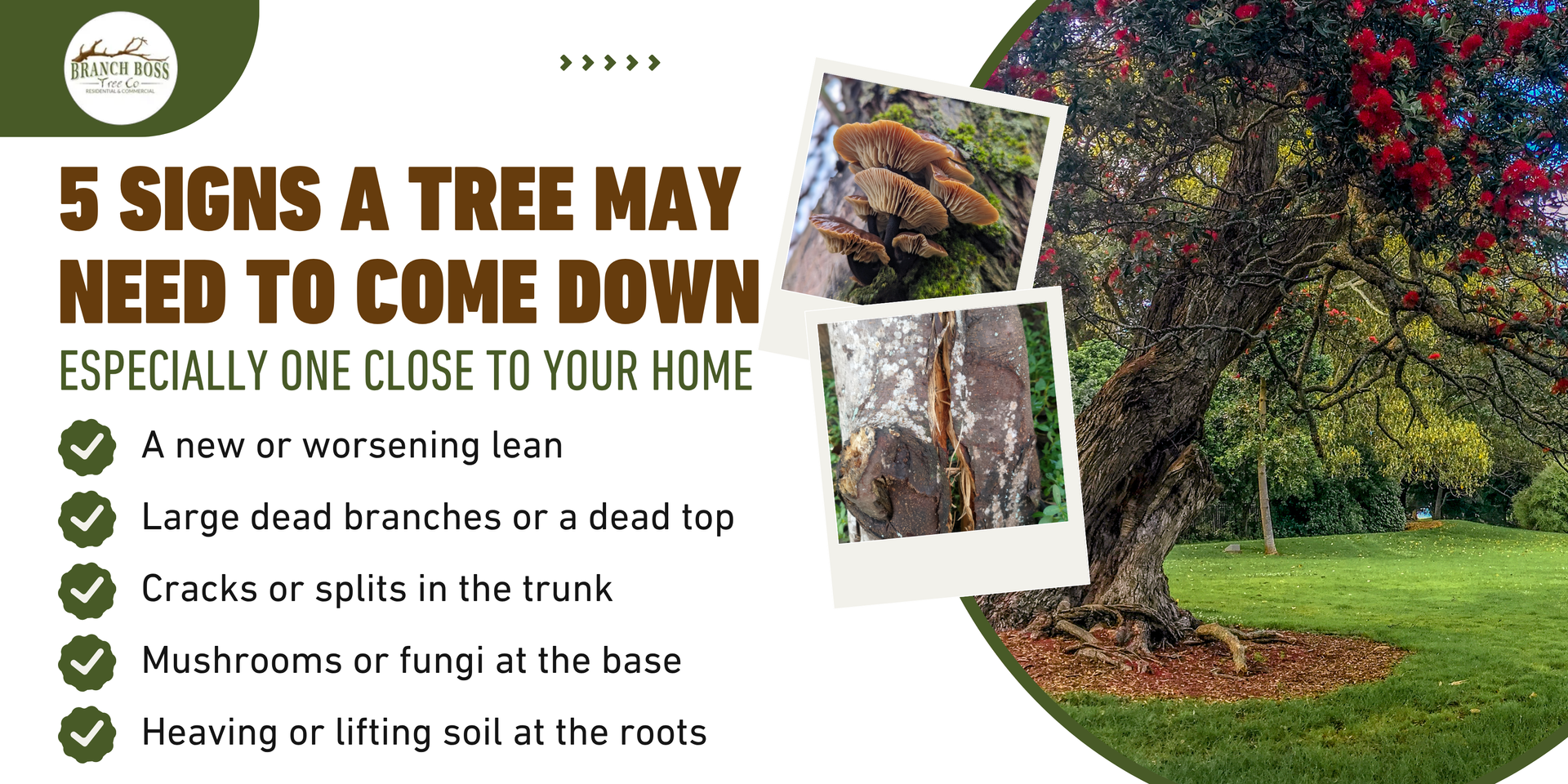
Not every leaning tree is dangerous, but a lean that is new, or one that is getting worse, is one of the clearest warning signs a tree may be failing.
The distinction matters. The USDA Forest Service explains that many trees lean naturally and have grown that way for years, often correcting their upward growth to compensate, which signals a stable root system. What deserves real concern is a lean that appears suddenly or increases over time, because that points to a root system that is giving way. A displaced center of gravity also makes every other defect in the tree more dangerous.
What separates a safe lean from a hazardous one:
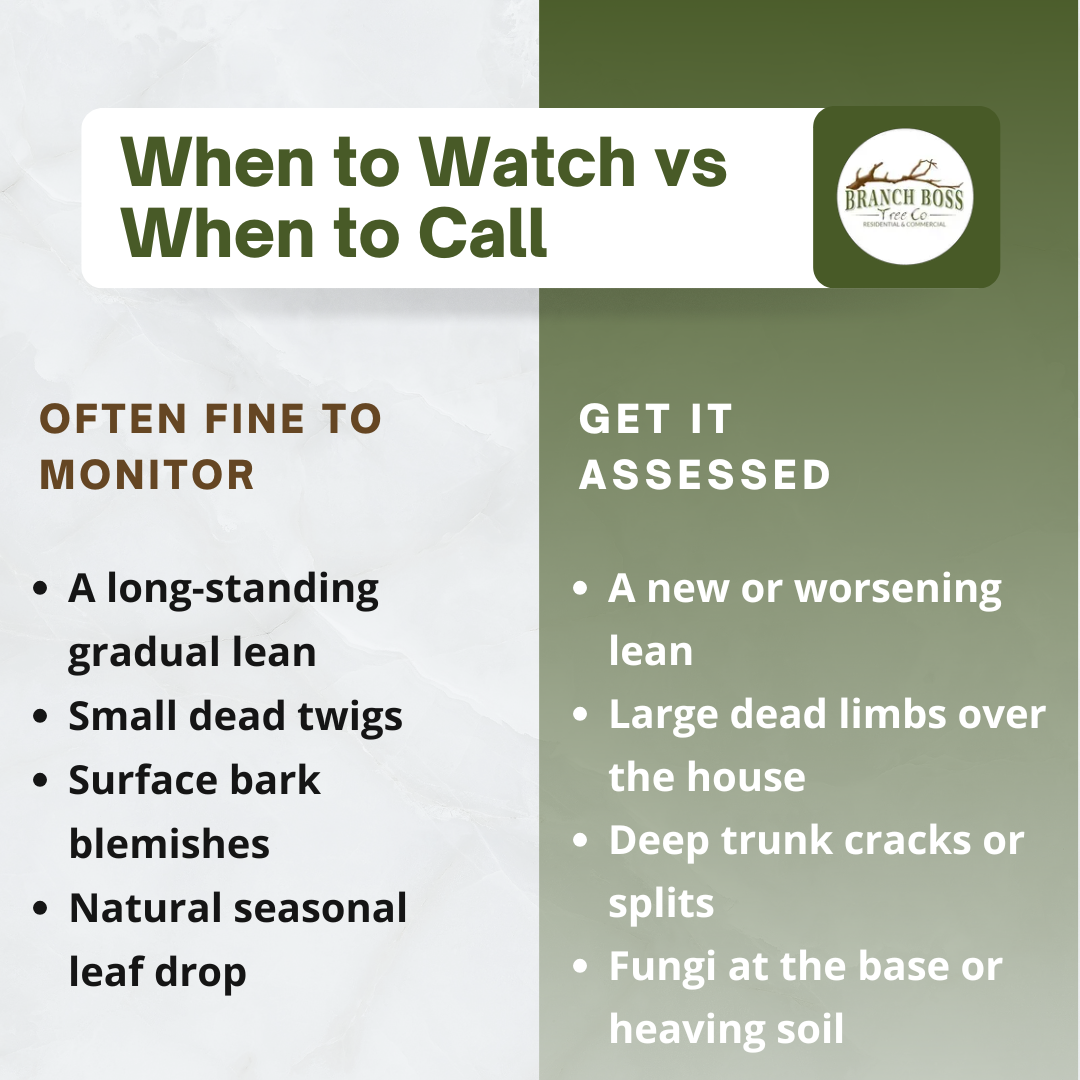
- A long-standing, gradual lean is often stable
- A sudden or worsening lean signals root failure
- Soil cracking or heaving on one side is a red flag
- A lean toward the house raises the stakes sharply
If a tree near your home has started leaning, or a familiar lean is visibly getting worse, that change is worth a professional look, particularly after the soil-loosening rains and winds of storm season.
2. Large Dead Branches or a Dead Top
Dead wood in a tree is the most predictable failure point, and when the dead branches are large or the top of the tree is dying, the risk climbs, especially over a house or driveway.
Dead branches have no flexibility. Where a living branch bends in the wind, a dead one snaps, and a large dead limb, often called a widow maker when it hangs in the canopy, can fall without any warning even on a calm day. A dead or dying top, called dieback, often signals a deeper problem with the tree's health or root system. In the North Texas heat and drought of late summer, trees under stress commonly shed branches or show dieback, which is why this sign is so relevant right now.
What to watch for:
- Large branches with no leaves during the growing season
- A dead or thinning top while the rest leafs out
- Branches that have already fallen on calm days
- Dead limbs positioned directly over the house or drive
A few small dead twigs are normal and often prunable. Large dead limbs or a dying top on a tree near the home is a different matter, and a sign the tree needs professional assessment.
3. Cracks or Splits in the Trunk
A crack in the trunk or a major limb is a structural failure in progress, and it is one of the more serious signs that a tree may need to come down.
The USDA Forest Service identifies cracks as long, narrow separations in the bark or wood that indicate the tree is failing, and notes that horizontal cracks in particular often signal internal decay. Deep vertical cracks, splits where a major limb meets the trunk, and cracks connected to a weak fork are all warning signs. A weak fork is a V-shaped union where two stems meet with bark grown inside the joint rather than solid wood, and these unions frequently develop cracks as they begin to pull apart, exactly the kind of failure that a storm turns into a split trunk.
What the cracks are telling you:
- Deep trunk cracks indicate compromised structure
- Horizontal cracks often mean internal decay
- Cracks at a V-shaped fork signal a failing union
- A crack plus a lean or decay is far more dangerous
Cracks tend to compound with other problems. A tree with a crack, a lean, and decay together is dramatically more dangerous than one with any single issue, and a combination like that near a home warrants prompt professional evaluation.
4. Mushrooms or Fungi at the Base or on the Trunk
Mushrooms or shelf-like fungi growing on the trunk, at the base, or over the root area are one of the most reliable outward signs of decay inside a tree, and they are easy to miss or dismiss.
Fungi that feed on wood are a sign that the wood they are growing on is decaying. When they appear at the base of a tree or on the root flare, they often indicate root or lower-trunk decay, which is especially concerning because that is the part of the tree holding it upright. The difficulty is that a tree can look green and healthy in the canopy while its roots or base are significantly compromised. Not every tree with fungi is doomed, some compartmentalize decay and stand safely for years, but the presence of fungi means a professional needs to determine how much sound wood remains.
What fungi can signal:
- Wood-decay fungi indicate the wood is breaking down
- Growth at the base points to root or trunk-base decay
- The canopy can look healthy while the base fails
- Only assessment reveals how much sound wood is left
Because base and root decay directly affect whether a tree can stay standing, fungi in these locations on a tree near your home is a sign worth taking seriously rather than ignoring.
5. Heaving Soil or Exposed, Lifting Roots
The roots anchor the tree, and when the soil around the base starts heaving or the roots begin lifting, the tree's anchor is failing, one of the most urgent signs of all.
The USDA Forest Service notes that root problems often stay hidden until signs of root failure become obvious, such as soil cracking or mounding, roots lifting or breaking, or a sudden increase in lean. Because root defects can cause a whole tree to fail, green and healthy-looking or not, these ground-level signs carry serious weight. Soil that is cracking or mounding on one side of the tree, roots that appear to be pulling out of the ground, or a tree that has begun to lift at its base after a storm all point to a root system losing its hold.
What root failure looks like:
- Soil cracking, heaving, or mounding near the base
- Roots visibly lifting or pulling from the ground
- A gap opening between the trunk base and soil
- A new lean paired with any of the above
Root failure is particularly dangerous because it can bring down an entire tree at once rather than a single branch. Any of these signs on a tree near a structure calls for prompt professional assessment.
When a Tree Can Still Be Saved
Seeing one of these signs does not automatically mean removal. An honest tree company looks for ways to preserve a tree before recommending taking it down, and many issues have solutions short of removal.
| Situation | Often the answer |
|---|---|
| A few small dead branches | Pruning, not removal |
| A long-standing stable lean | Monitoring over time |
| A single limb over the house | Targeted limb removal |
| Minor surface decay, sound wood remains | Assessment, then monitoring |
| Early health decline | Care and reassessment |
Removal is the right call when the structural risk is real and cannot be safely managed, when a tree is dead or mostly dead, or when a compromised tree is positioned where its failure would strike a home, vehicle, or people. The goal of a professional assessment is to make that call honestly, preserving the tree when it can be preserved and recommending removal only when it genuinely is the safest, most practical option.
Why These Signs Matter More Heading Into Fall
The timing of this assessment matters in North Texas, where the late-summer condition of a tree sets up how it handles the storms ahead.
| Factor | Why it raises the stakes now |
|---|---|
| Summer heat and drought | Stresses trees, causes dieback and decline |
| Weakened trees | More likely to fail under added load |
| Approaching storm season | Wind and rain expose existing defects |
| Saturated soil in storms | Loosens already-compromised root systems |
What to Do About Remaining Trees After a Storm
A tree that has struggled through the summer and shows one or more of these signs is exactly the tree most likely to fail when fall storms arrive. Addressing a known hazard now, during calm, dry weather, is far safer and less costly than dealing with a failed tree during or after a storm.
Branch Boss Tree Co. provides honest, safety-focused tree assessment across Granbury, Cleburne, Burleson, and the Hood County and Johnson County area. The
tree removal service handles hazardous removals safely, including in tight spaces near structures, and the
emergency services team is available 24/7 when a tree cannot wait. For trees that can be saved, proper
tree trimming and pruning is often the better answer, and the related article on
what to do after a tree falls on your property covers the storm-response side.
Frequently Asked Questions
Does a leaning tree always need to be removed?
No. Many trees lean naturally and have grown that way stably for years, often correcting their upward growth in a way that signals a healthy root system. The concern is a lean that is new or getting worse, which can indicate root failure, especially if accompanied by soil cracking or heaving at the base. A long-standing gradual lean is often fine to monitor, while a sudden or worsening lean toward your home warrants a professional assessment.
Are mushrooms growing on my tree always a sign it needs to come down?
Not always, but they should never be ignored. Wood-decay fungi indicate the wood they grow on is breaking down, and when they appear at the base or root flare, they point to decay in the part of the tree that holds it upright. Some trees wall off decay and remain sound for years; others are seriously compromised. Only a professional assessment can determine how much sound structural wood remains and whether the tree is still safe.
How can a tree look healthy but still be dangerous?
This is one of the most important things homeowners miss. A tree can have a full, green canopy while its roots or trunk base are significantly decayed or failing, because the most dangerous defects, internal decay, root plate instability, and cracks, are often hidden below ground or under bark. This is exactly why the ground-level and trunk signs matter, and why a professional evaluation catches risks that are not obvious from the canopy alone.
Is summer or fall a better time to deal with a hazardous tree in North Texas?
If a tree is showing hazard signs, sooner is better, and late summer is an ideal window. Handling a known hazard during calm, dry weather is far safer and less disruptive than facing a failed tree during a storm. North Texas trees stressed by summer heat and drought are more likely to fail when fall storms arrive, so addressing the problem before that season is the smart approach. A dangerous tree, of course, should be assessed right away regardless of season.
Can Branch Boss remove a tree that's very close to my house?
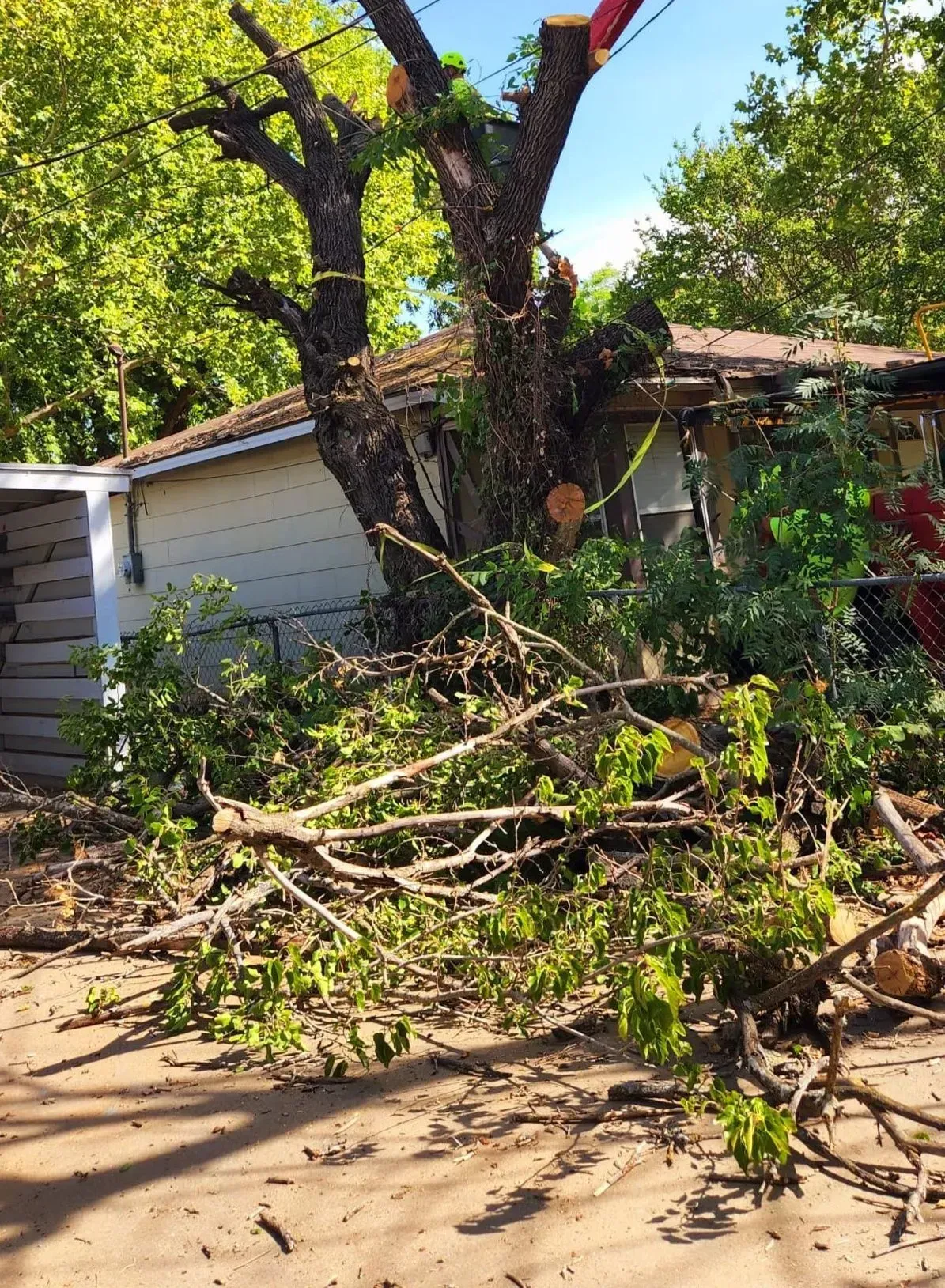
Yes. Removing a tree in a tight space near a structure requires proper rigging, equipment, and experience, which is exactly what a professional crew provides. Branch Boss removes hazardous trees safely even in confined spaces near homes, driveways, and power lines, lowering the tree in controlled sections rather than simply felling it. The team assesses the situation and plans the removal to protect the surrounding property.
Does Branch Boss serve Cleburne, Burleson, and the rest of Hood and Johnson County?
Yes. Branch Boss Tree Co. provides tree removal, hazardous tree assessment, trimming, and 24/7 emergency service across Granbury, Cleburne, Burleson, Midlothian, and the surrounding Hood County and Johnson County communities. Every job starts with an honest assessment of whether the tree can be preserved or genuinely needs to come down.
If you have a tree near your home showing a new lean, large dead branches, trunk cracks, fungi at the base, or heaving soil at the roots, in Granbury, Cleburne, Burleson, or anywhere in Hood and Johnson County, Branch Boss Tree Co. can assess it honestly and recommend the safest, most practical course, whether that is preservation or removal. Getting ahead of it now, before fall storms arrive, is the safer path.
Don’t wait for the next storm to test your trees.
👉 Worried about a tree near your roof, driveway, or power lines?
Contact Branch Boss Tree Co. today to schedule your summer tree assessment and get expert trimming
that protects your property and peace of mind.
Call us today at
817-487-8448 to let us handle your tree and tree stump removal needs with professionalism and care.