7 Holiday Lighting Mistakes That Can Damage Your Trees
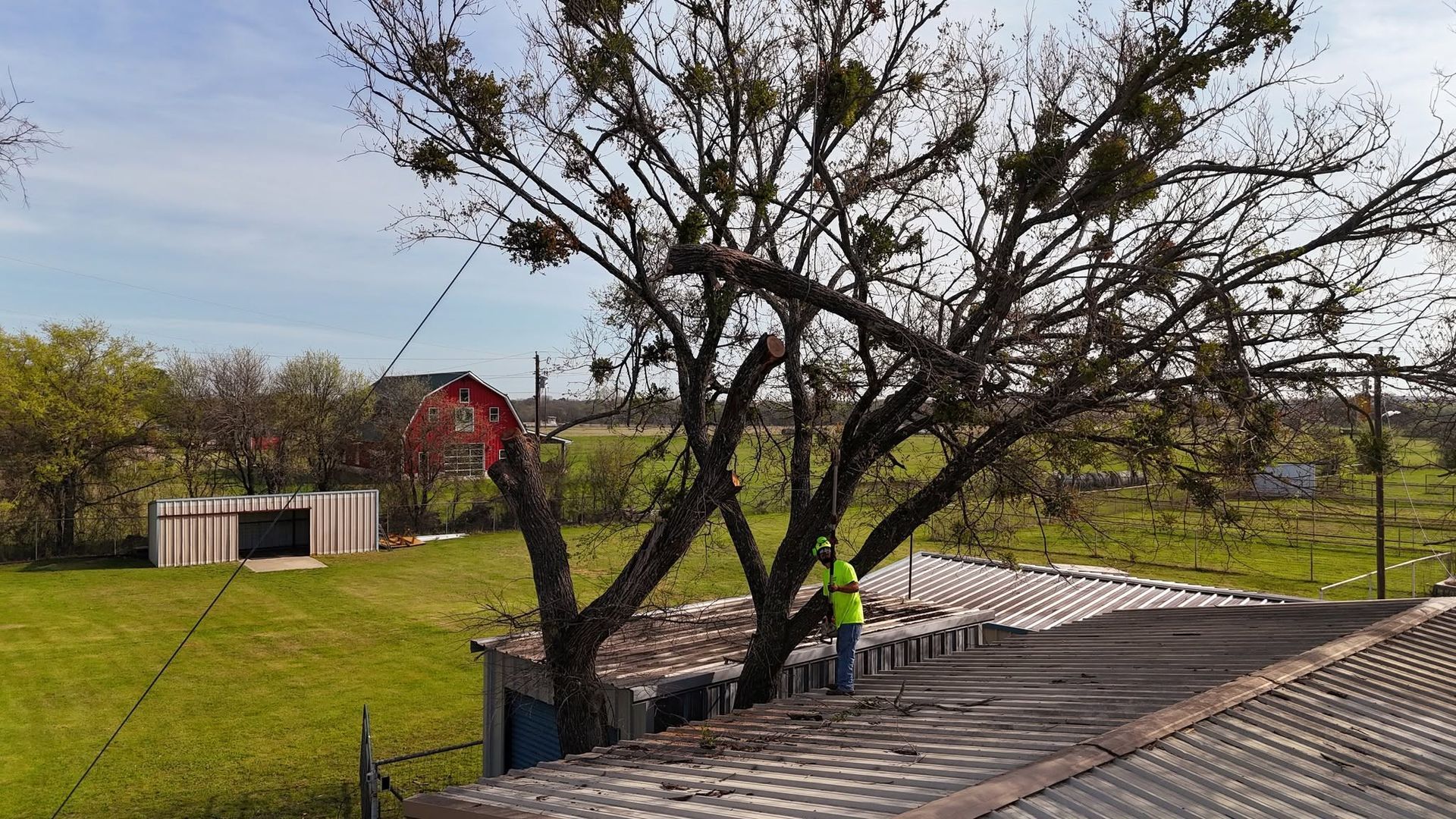
A homeowner can spot many warning signs, but some conditions are difficult to evaluate safely from the ground. Mature oaks and pecans can carry large loads high in the canopy, and internal decay may not be obvious from the outside.
A tree health assessment in Burleson, TX, Granbury, Cleburne, or Midlothian makes sense when the tree has been through severe weather, has developed new symptoms, or sits close enough to a home, driveway, fence, road, or other target that failure would create a meaningful problem.
That is where
tree health care in Cleburne, TX and surrounding North Texas communities becomes a decision process rather than a one-service recommendation.
There is no responsible flat price for tree service in Granbury, TX because weather-related tree work can range from a simple pruning visit to a complex removal involving rigging, heavy equipment, nearby structures, difficult access, or emergency response.
What Changes Tree Service Cost?.
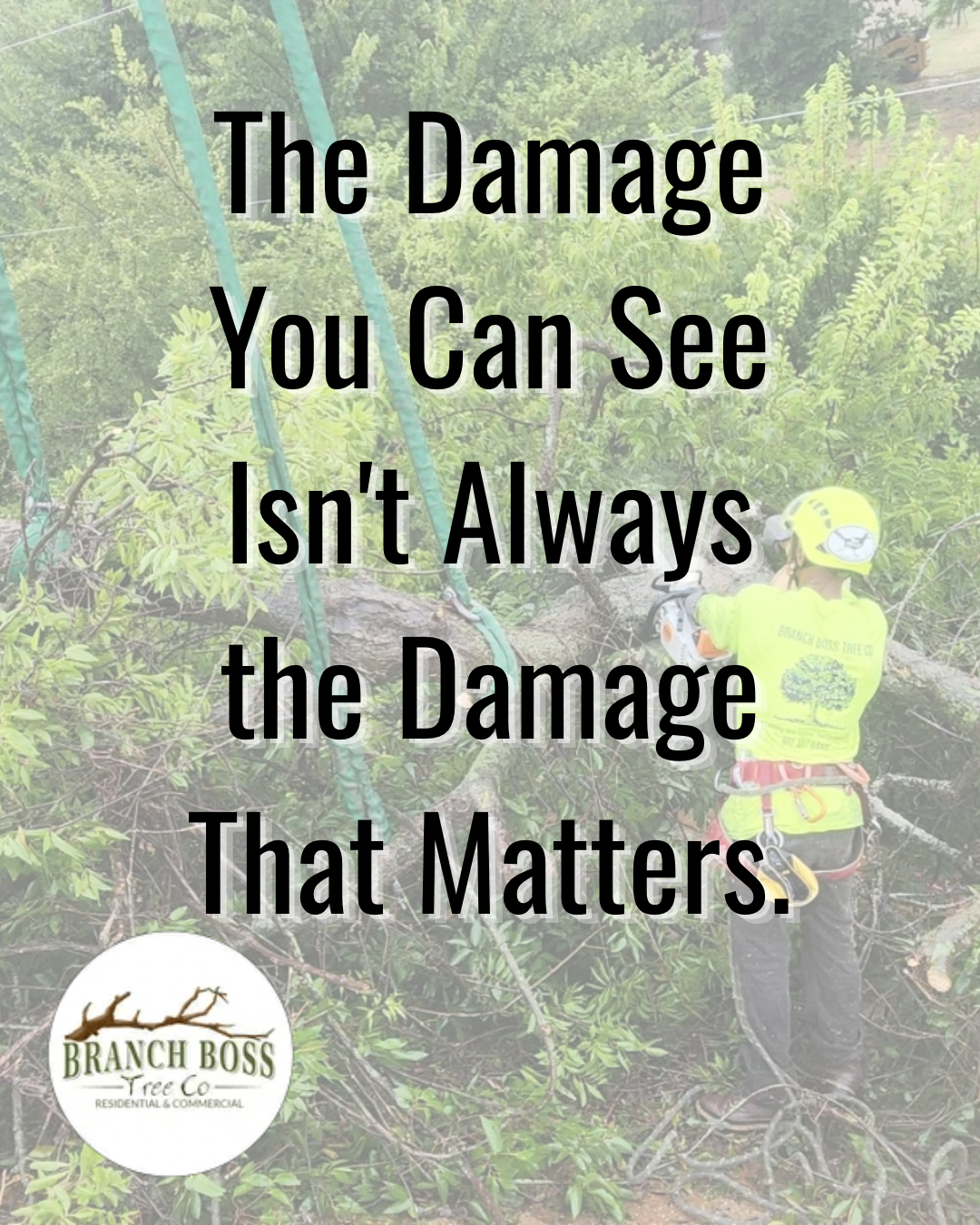
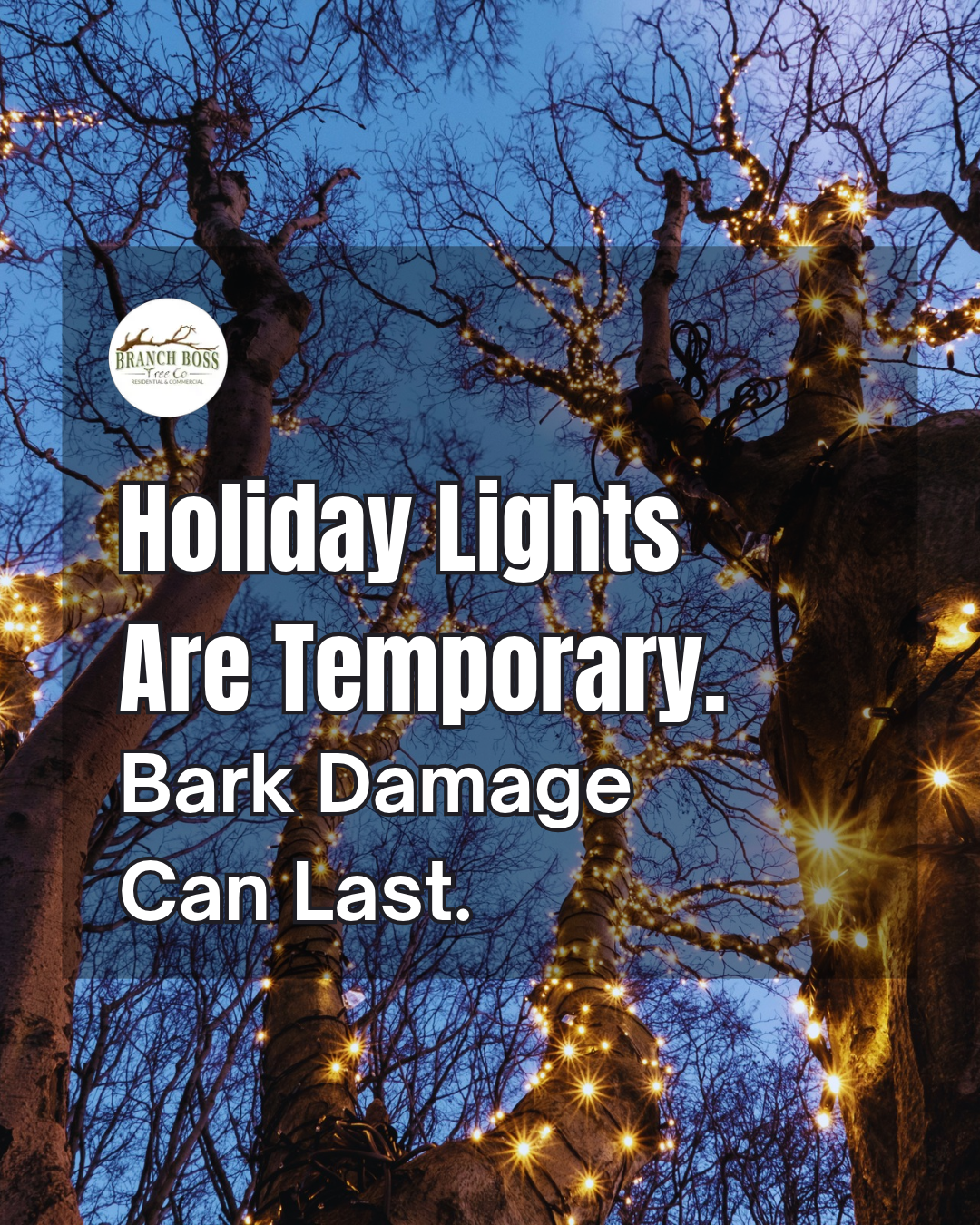
Christmas lights on outdoor trees can make a front yard welcoming without changing the trees themselves. Problems start when a display requires tight attachments, unnecessary cuts, or access through questionable branches. A living tree is more than a convenient frame for lights. Protecting its bark and structure should shape the decorating plan from the beginning.
For Cleburne homeowners preparing for the holidays, early planning leaves time to change a display or investigate a damaged limb. At Branch Boss Tree Co., we help with tree trimming, maintenance, and hazardous tree concerns throughout the surrounding area.
The best display fits the tree you have rather than forcing the tree to fit the display. These seven outdoor tree lighting mistakes explain what to avoid, when to change your approach, and when professional tree care makes sense.
Wrapping Cords Too Tightly Around Trunks and Branches
A tight spiral may look tidy, but cords should not bind against living bark. Rigid ties and tensioned wire can rub or cut as branches move, especially when an attachment stays in place too long. The Morton Arboretum's landscape-lighting guidance recommends loose, soft attachments and prompt removal after the holidays. Treat every attachment as temporary, including those that look harmless from the driveway.
Before installation, decide how the entire string will come down without pulling it through forks or dragging it across branches. Choose a manageable tree rather than stretching one set of lights into difficult upper growth. If an old cord is already embedded, stop decorating that section and request professional advice instead of digging into the bark. A visible groove is a reason to investigate the attachment, not a reason to tighten another string over it.
Using Nails or Staples to Hold Lights Against Bark
Fasteners that pierce bark create wounds for the sake of a temporary display. A staple gun also makes it easy to damage a light cord while trying to secure it. Screws, nails, and similar hardware should not be the default solution when a string slips. If a display only stays in place after you fasten it into the tree, redesign the display rather than adding more hardware.
Look closely at the intended attachment point before you begin, particularly where older decorations were installed. Do not cover an existing injury with another bracket or attempt to seal it with household caulk. Our
tree trimming and property maintenance services can help assess a damaged area when the condition of the wood is uncertain. Share what was attached, how long it remained, and whether the branch has changed since installation.
| Decorating choice | Concern to avoid | Better direction |
|---|---|---|
| Nails or staples through bark | Unnecessary wounds and possible cord damage | Choose a display that does not require penetrating fasteners |
| Wire pulled tightly around a branch | Binding and abrasion | Use loose, temporary attachments appropriate for the application |
| A string forced through a narrow fork | Difficult removal and rubbing | Reroute before installation |
| Lights over an existing bark injury | Concealing a condition that needs attention | Leave the area accessible for evaluation |
| A display that needs repeated readjustment | More handling and attachment changes | Simplify the layout |
There is no need to turn every exposed mark into a major tree-care project. What matters is the location, depth, extent, and surrounding condition. A photo taken from a safe position can help explain the concern when you contact us, but it cannot establish the strength of a branch by itself.
Hanging Heavy Decorations on Small or Damaged Limbs
A branch that holds a light string is not automatically suitable for a heavy ornament, suspended figure, or hanging sign. The load also changes when a decoration swings or catches the wind. Avoid choosing a support point solely because the branch is close to the front walkway. No branch diameter in a decorating guide can guarantee that a particular limb will support your display.
Choose the location before choosing the prop
- Use ground-supported displays for substantial decorations: Keep their weight off the canopy.
- Avoid visibly damaged support points: Cracks, dead sections, and partially detached limbs deserve attention before decorating nearby.
- Keep displays out of visitor routes: A decoration that drops or swings should not land where guests gather.
- Skip pull tests: Shaking or hanging from a branch does not establish that it is dependable.
This applies to mature shade trees in Granbury just as much as smaller front-yard trees in Joshua. Size and a leafy canopy do not provide a complete picture of structural condition. If an earlier storm damaged the intended decorating tree, our guide to
tree trimming versus tree removal after storm damage explains why localized limb damage and whole-tree instability require different decisions. A decorating plan should wait when the support tree needs evaluation.

Climbing Branches or Leaning Ladders Against Questionable Wood
Decorating becomes a different job when you need to climb into the canopy or use a limb to steady a ladder. A branch can appear substantial while its attachment or interior condition remains uncertain. The Texas Department of Insurance's tree-work safety guidance identifies unstable ground, damaged limbs, heights, and electrical lines as important hazards. For homeowners, the practical response is to avoid turning a lighting project into improvised tree climbing.
Choose decorations you can install from a stable ground position without standing beneath suspect limbs. If the upper canopy is essential to the design, seek an appropriately qualified lighting installer and resolve tree hazards first. Do not combine ladder work with pruning tools to clear a path for lights.
A smaller display is a better choice than reaching farther into an uncertain tree.
Installing Lights Near Overhead Electrical Lines
Branches can conceal overhead conductors, especially when you focus on the shape of the tree rather than the space behind it. A cord, ladder, or decorating pole can also reach farther than you expect. Treat overhead lines as energized and keep the entire project well away from them. TDI identifies a minimum clearance of 10 feet for people and equipment, with greater distances required for higher-voltage lines; that minimum is not permission to decorate a utility-adjacent tree.
When the utility provider needs to be involved
If branches touch lines, hang over them, or put the intended installation route near them, choose another display location. Contact the utility provider about the conflict instead of cutting branches or trying to move the wire. Only appropriately qualified line-clearance workers should handle tree work within required electrical approach distances. A general tree-care appointment does not automatically authorize work around energized conductors.
Keep everyone away from a tree or decoration involved with a fallen line. Do not try to disconnect a string, retrieve a ladder, or move a branch out of the way. Call emergency services for an immediate danger and notify the utility provider. The decoration can remain where it is until the electrical hazard has been addressed.
Leaving Lights and Ties Up Long After the Holidays
Taking lights down belongs in the original plan, not on a vague list of jobs for spring. Forgotten attachments can become harder to see as new growth develops, and returning to the same display next year does not make year-round storage in the canopy appropriate. Set a removal reminder before installation and keep track of every tie and support. An unplugged string can still be a physical attachment around a living branch.
Remove the display carefully rather than yanking a connected string from the ground. If it snags, stop instead of pulling harder or climbing after it. Homeowners in Burleson and Alvarado can use the same simple approach: install only what you can reasonably remove, and arrange appropriate help for anything beyond reach. Once everything is down, look from the ground for remaining loops, visible scrapes, or broken twigs that were hidden by the display.
Decorating Before Addressing Broken or Overhanging Limbs
A holiday deadline should not move a damaged limb lower on the priority list. A partially broken branch above the front door needs attention even if it would make a useful place to hang lights. Conversely, a healthy branch should not be removed merely because it interrupts a preferred lighting pattern. Our starting question is what condition needs attention, rather than how much canopy needs clearing for decorations.
Watch from a safe distance for changes such as a newly hanging limb, an obvious split, or debris caught overhead. Do not walk under the branch to photograph its attachment or try to knock it down. Our article on
why dead trees become more dangerous before and during removal explains why deteriorated wood requires careful handling. If a whole tree appears compromised, evaluating one decorating branch will not resolve the larger concern.
| What you notice | What to do about the display | Appropriate next step |
|---|---|---|
| No visible defect and a simple ground-accessible plan | Keep the design modest and temporary | Follow lighting instructions and monitor attachments |
| Existing bark damage or an embedded old tie | Leave that area undecorated | Request advice before removing embedded material |
| A broken or dead limb above an entrance | Keep people away from beneath it | Arrange a tree assessment before decorating |
| A new lean, major split, or hanging branch | Stop work around the affected tree | Seek prompt professional evaluation |
| A branch or display near electrical lines | Choose another location | Contact the utility provider about the conflict |
Pruning should follow the tree's needs
Texas A&M Forest Service's cold-weather tree-care guidance distinguishes necessary removal of dead or damaged limbs from pruning live tissue, which is generally better timed for dormancy. Species and disease precautions also matter, particularly with oaks. Requesting tree trimming before holiday decorating should begin with an assessment of those factors. It should not mean topping the tree or removing healthy branches simply to make more room for lights.
Deciding Whether You Need Tree Care Before Decorating
You may only need to change the display, or you may have discovered a tree problem worth addressing independently of the holidays. Separate those decisions before requesting a quote. A high branch that is difficult to reach can be left undecorated without being removed. A cracked branch over an occupied area deserves attention even if you cancel the display entirely.
A practical plan for your property
- Change the display when the problem is height, decoration weight, tight spacing, or difficult removal.
- Request tree maintenance advice when you find old attachments, visible damage, or limbs interfering with regularly used spaces.
- Pause access beneath a hazard when a branch is hanging, split, or recently damaged.
- Contact the utility provider first when conductors are involved or clearance is uncertain.
- Discuss selective work rather than requesting broad canopy reduction to accommodate a temporary display.
Before an appointment, identify where guests, vehicles, and installers will be moving. Explain whether you want to preserve the current canopy and whether the concern appeared after a specific event. Photos from outside the potential fall area can help describe the location. We still need to evaluate the relevant tree and site conditions before recommending work.
What affects the cost of necessary tree trimming?
We base the proposed work on the tree, access, affected limbs, and nearby structures. A single low branch and a large damaged limb above a roof involve very different planning. For general budgeting, HomeGuide's tree-trimming cost guide reports a national average range of $400 to $900 per tree. That range is a starting point for understanding tree-care budgets, rather than a price for preparing any particular holiday display.
| Budget consideration | Planning information | What to clarify in the proposal |
|---|---|---|
| General national tree-trimming range | About $400 to $900 per tree | The specific tree and pruning objectives |
| Height and branch location | Higher or difficult work can require different equipment | How the crew will access the work |
| Structures and occupied areas | Controlled handling may be necessary | Protection of roofs, fences, and access routes |
| Damaged or deteriorated wood | Condition can complicate removal | Which limbs require attention and why |
| Debris handling | Cleanup scope affects the overall work | Whether hauling and final cleanup are included |
Ask us to identify the branches included and explain the purpose of each part of the recommendation. If removal is being considered, ask why selective trimming would not address the concern. Our
tree removal services
address hazardous or unsuitable trees when that scope is appropriate. Holiday decorating alone should not be the reason to remove an otherwise suitable tree.
Frequently Asked Questions
Can Christmas lights damage a living tree?
They can when attachments wound or bind the bark, decorations load questionable branches, or installation breaks smaller growth. A temporary display does not need to cause damage. Plan around the tree's existing structure and remove everything carefully afterward.
Are zip ties a good way to secure lights to branches?
Avoid cinching rigid ties against bark. Their contact points can rub, and forgotten attachments can become restrictive over time. Use an appropriate temporary attachment method with room for movement, and include every attachment in your removal plan.
Should I trim my tree before hanging Christmas lights?
Only when there is a tree-care reason for the work. Dead or damaged limbs may need attention, while healthy live growth may be better left alone or pruned at another time. Change the lighting layout rather than removing sound branches for convenience.
Can I leave unplugged light strings in the tree all year?
Leaving them unplugged does not eliminate binding, snagging, or abrasion concerns. Seasonal decorations should come down after use. If a string has become embedded or inaccessible, ask for help instead of forcing it free.
What if the tree I want to decorate is near power lines?
Use another location and contact the utility provider if branches conflict with conductors. Do not install lights, use a pole, or prune to create clearance yourself. Electrical-line work requires the appropriate training and coordination.
Does Branch Boss install holiday lights?
Our services discussed here are tree trimming, maintenance, assessment of damaged limbs, and appropriate removal work. Contact us about the tree-care needs you identify before decorating. For lighting installation, choose a provider qualified for that work and discuss how the tree will be protected.
Protect Your Trees Before the Holiday Display Goes Up
If you find a damaged limb or questionable tree while planning your lights, we can help you decide what deserves attention. Our tree trimming and maintenance services support homeowners in Cleburne, Granbury, Burleson, Joshua, Alvarado, and Fort Worth. We focus on the tree's condition and the work appropriate for the property. A useful recommendation protects your landscape beyond the holiday season.
Contact Branch Boss Tree Co. or call 817-487-8448 to discuss a tree concern before decorating begins. Tell us where the affected branch is and what changes you have noticed. Keep people out from beneath damaged limbs while you arrange help. We can review the situation and explain the appropriate next step for your tree.
Tree Trimming and Property Maintenance
Related Blog: Tree Trimming vs Tree Removal After Storm Damage
Related Blog: Why Dead Trees Become More Dangerous Before and During Removal
Don’t wait for the next storm to test your trees.
👉 Worried about a tree near your roof, driveway, or power lines?
Contact Branch Boss Tree Co. today to schedule your summer tree assessment and get expert trimming
that protects your property and peace of mind.
Call us today at
817-487-8448 to let us handle your tree and tree stump removal needs with professionalism and care.